Prof. Anamuah-Mensah Advocates for a Mindset Shift to Elevate TVET


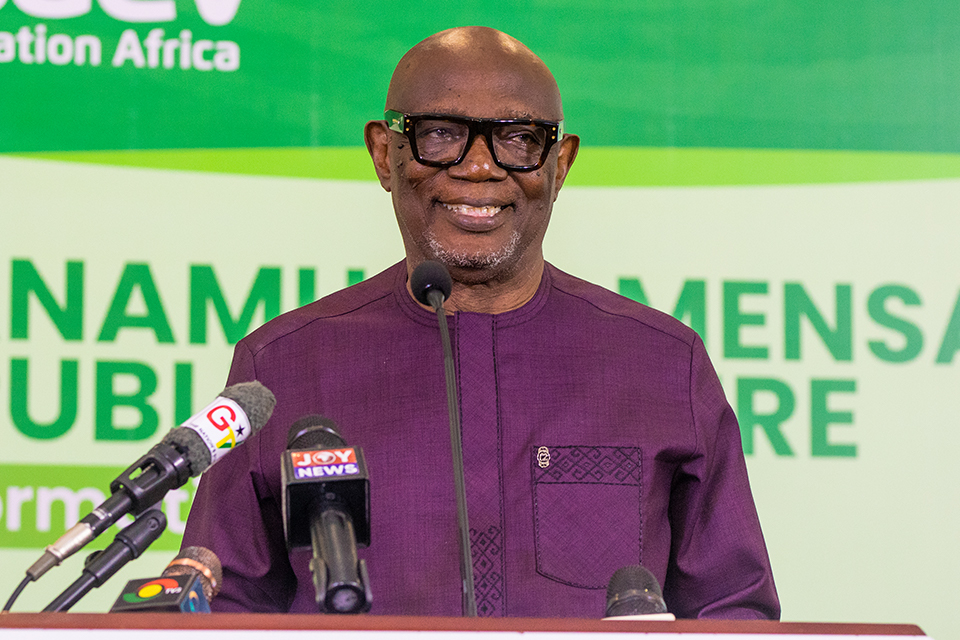
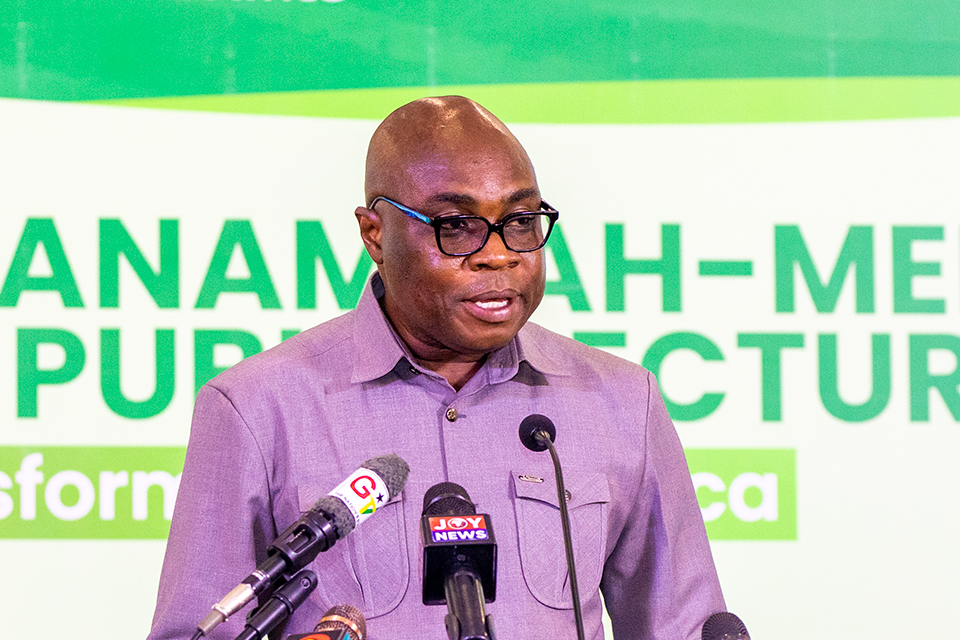
Prof. Jophus Anamuah-Mensah, the first Vice-Chancellor of the University of Education, Winneba (UEW) has called for a fundamental shift in societal attitudes towards Technical and Vocational Education and Training (TVET). He emphasised that Africa’s development depends on valuing skills, competence and innovation just as much as academic achievement.
Speaking at the inaugural Jophus Anamuah-Mensah Annual Public Lecture on TVET Transformation in Africa, Prof. Anamuah-Mensah stressed the urgent need to reposition TVET from the margins to the heart of national development strategies.
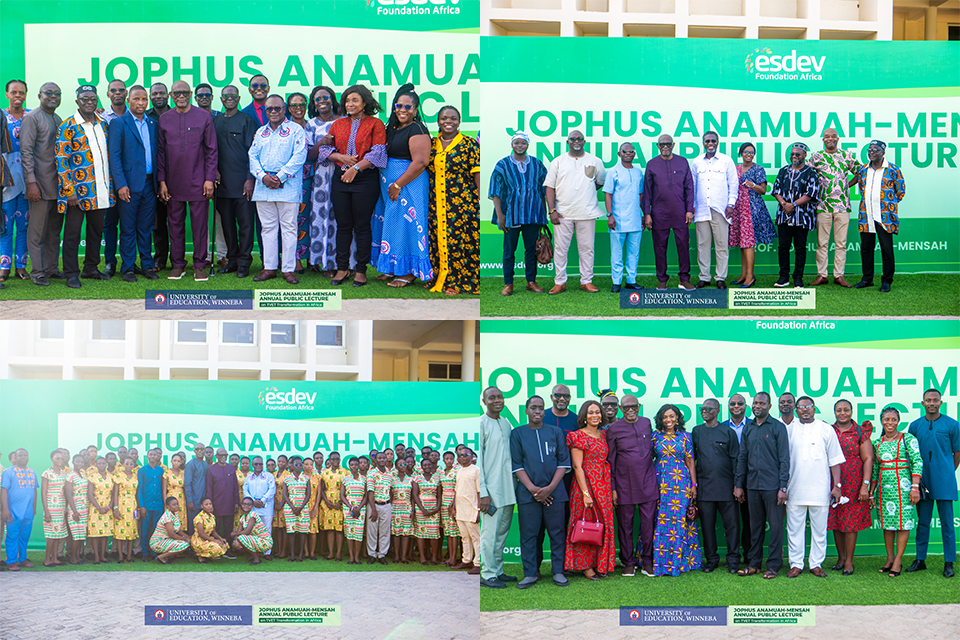
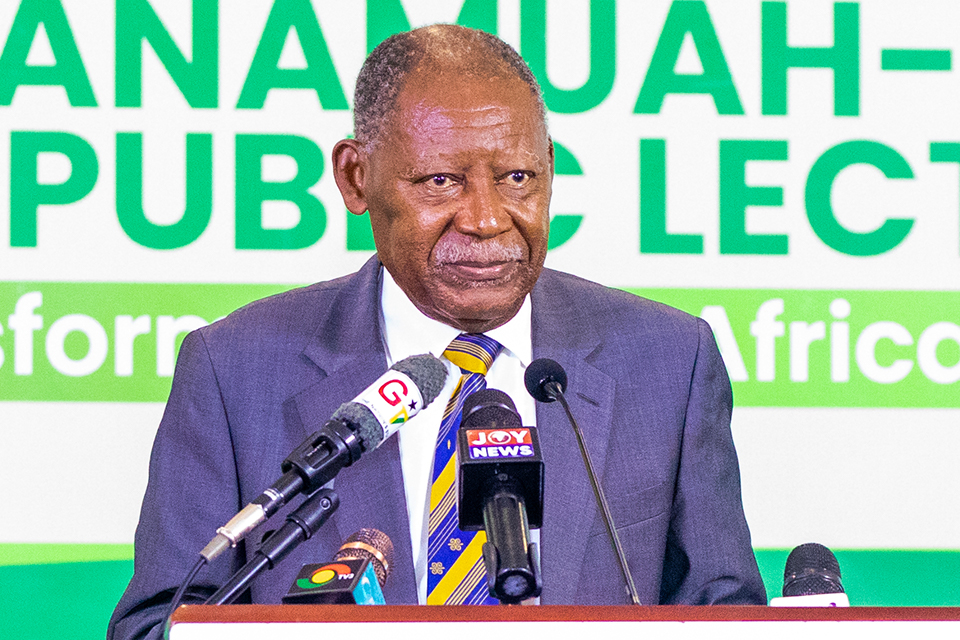
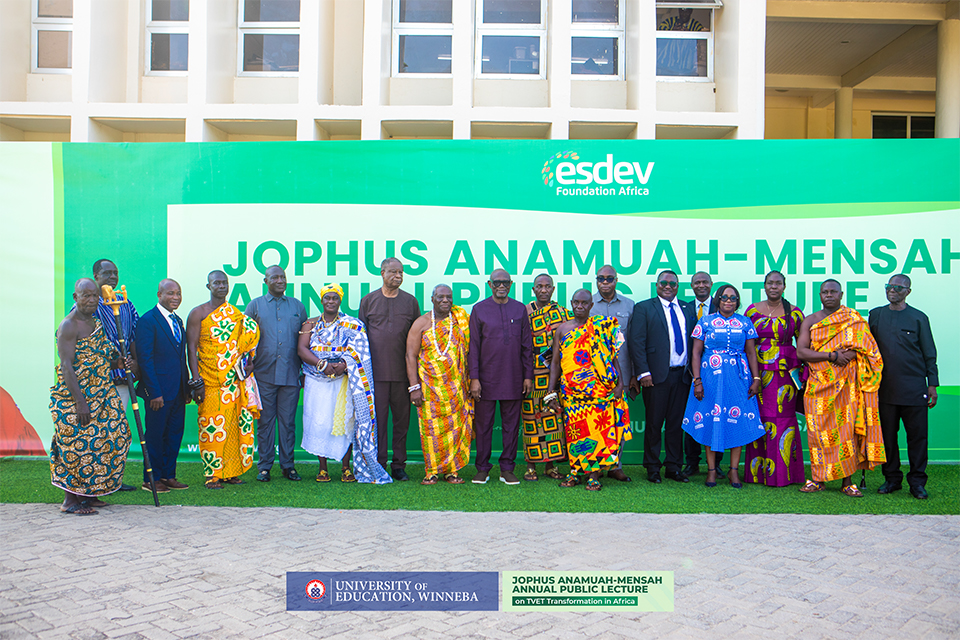
The event was held at the Jophus Anamuah-Mensah Conference Centre on UEW’s North Campus on Friday, 27th March, 2026. It was by the Education and Skills Development (ESDEV) Foundation Africa in partnership with the University of Education, Winneba; University of Cape Coast; University of Skills Training and Entrepreneurial Development (USTED); Accra Technical University; African Institute for Mathematical Sciences (AIMS) Ghana; Vice-Chancellors Ghana and Transforming Teaching, Education and Learning (T-TEL).
He observed that for decades, education systems across Africa have subtly but persistently devalued practical skills by prioritising purely academic pathways, creating a disconnect between education outcomes and labour market demands. “We have created a hierarchy where academic pathways are celebrated while technical and vocational pathways are undervalued. Yet today, we face a paradox: graduates without jobs and jobs without skilled workers,” he noted.
Prof. Anamuah-Mensah emphasised that TVET should no longer be regarded as a fallback option but instead as a primary pathway capable of driving economic transformation. He advocated deliberate efforts to ensure all students including those in universities, acquire at least one practical skill alongside their academic training to improve employability and entrepreneurial capacity.
According to him, strengthening links between education and industry through apprenticeships and practical training, starting from secondary education, remains crucial to bridging the gap between theory and practice.
Reflecting on Ghana’s education reforms, he acknowledged progress made through initiatives such as the Pre-Tertiary Education Act (2020) and the Technical Universities Act which have enhanced coordination and broadened pathways within the TVET ecosystem. However, he cautioned that reforms alone are not enough to create a meaningful impact. “Reform is not the same as transformation. Transformation requires sustained investment, strong industry partnerships, high-quality teaching and most importantly, a shift in mindset,” he stressed.
He identified societal perception as one of the most significant barriers to TVET advancement, urging stakeholders to foster a culture that grants equal respect to skilled artisans, technicians and professionals across all fields. “We must reach a point where a skilled artisan is respected as much as a university graduate,” he said, adding that until such parity is achieved, efforts to transform the sector will remain incomplete.
The renowned educator further highlighted the vital role of teachers and trainers in driving TVET transformation. He noted that the quality of education cannot surpass the competence of its educators. He called for targeted investment in developing instructors who combine technical expertise with effective pedagogy.
Prof. Anamuah-Mensah also urged policymakers and stakeholders to pay closer attention to the aspirations of young people, recognising that the youth are willing to work hard if provided with relevant opportunities and dignified career pathways. “If we get TVET right, young people will work with pride, our economies will grow and our development will be driven by local skills rather than external dependence,” he stated.
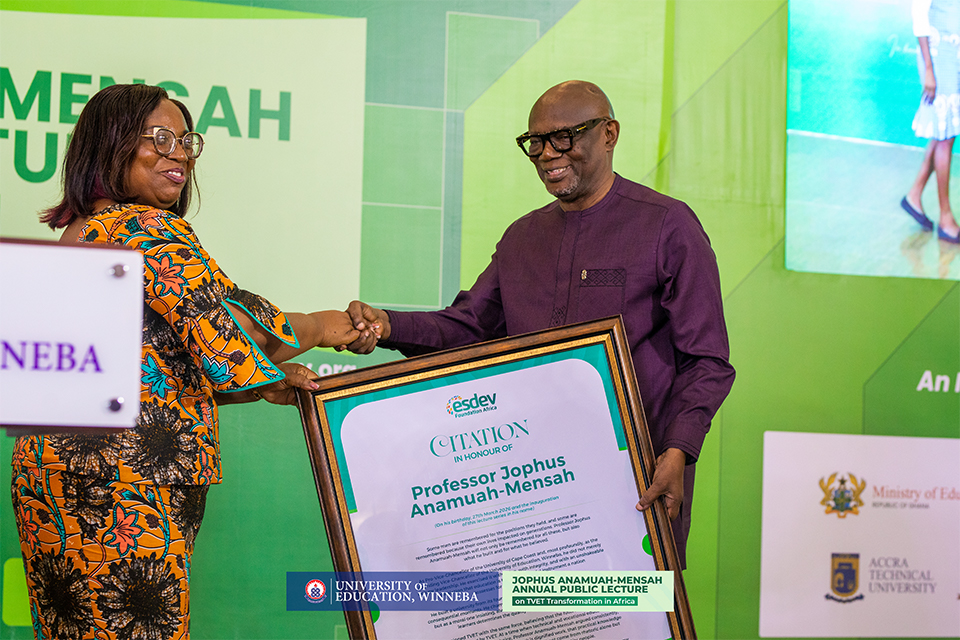
Describing the occasion as both humbling and deeply reflective, he attributed the honour bestowed upon him to divine grace rather than personal achievement. He expressed gratitude to ESDEV Foundation Africa, UEW management and partner institutions for recognising his contributions to education. He reiterated his lifelong conviction that education must serve national development and human dignity, not merely confer certificates—a principle that has guided his over four decades of service within Ghana’s education system and beyond.
Tracing his journey from humble beginnings in Cape Coast to leadership roles in academia, including his instrumental role in transforming the University College of Education, Winneba into the University of Education, Winneba, Prof. Anamuah-Mensah underscored the importance of resilience, mentorship and inclusive leadership in building enduring institutions.
He concluded with a renewed call to action, urging educators, policymakers, industry players and communities to collectively reposition TVET as a central pillar of Africa’s development agenda. “The future of Africa will not be built on certificates alone; it will be built on skills, competence, integrity, innovation, resilience and purpose,” he affirmed.
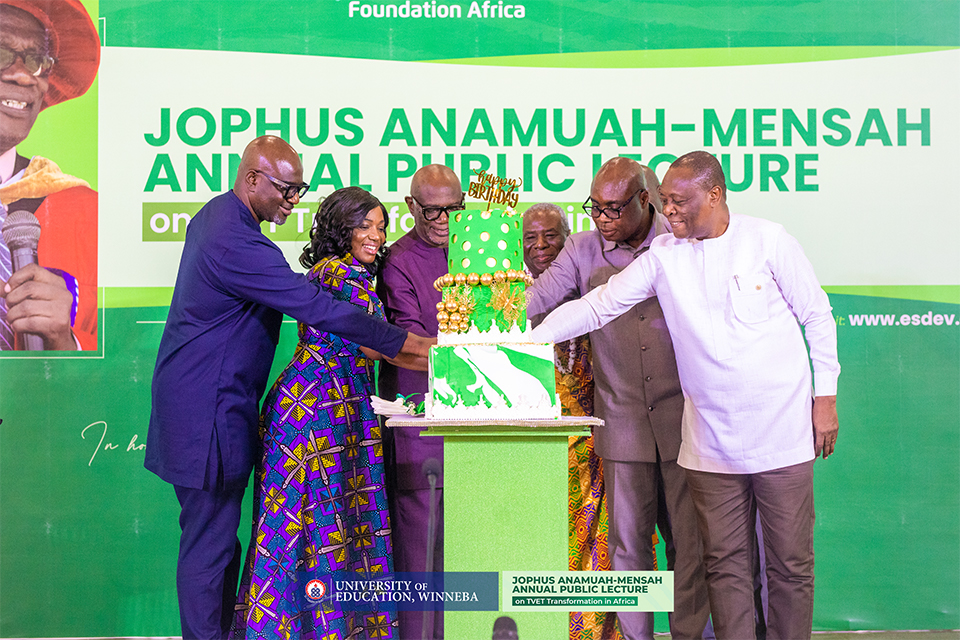
The lecture forms part of efforts to preserve the legacy of Prof. Jophus Anamuah-Mensah while advancing critical discourse on skills development and education reform across the continent.