UEW Registrars' Seminar Explores TfD and AI to Transform the Institution


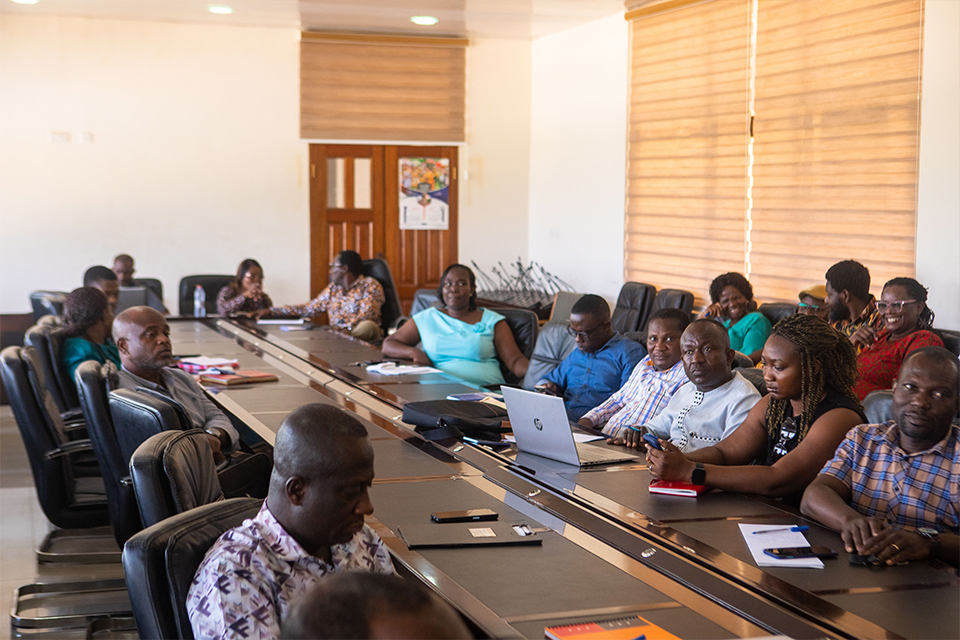
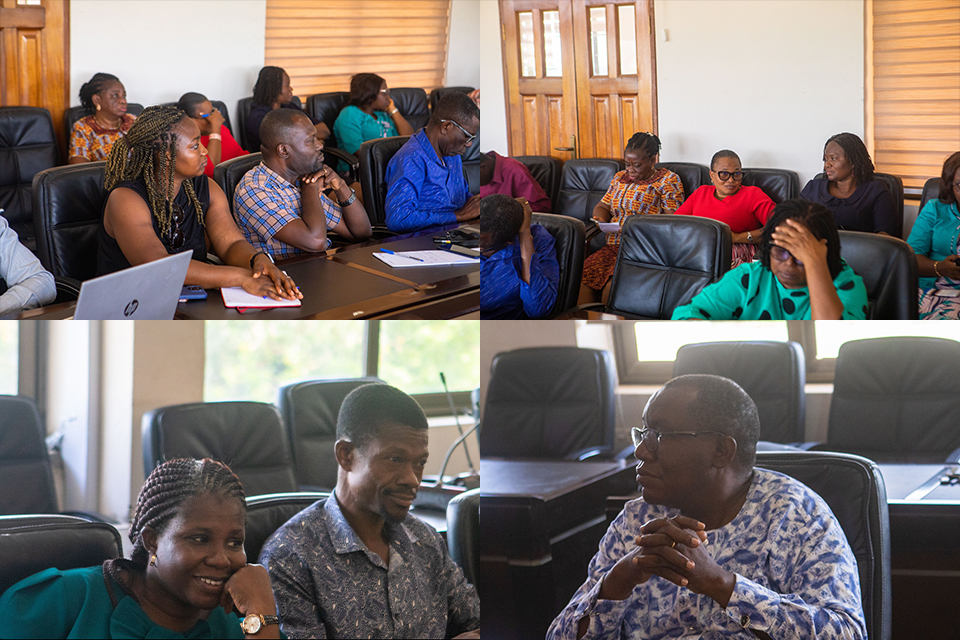
The Registrar’s Department of the University of Education, Winneba (UEW), on Wednesday, 25th June, 2025, held its 7th Monthly Seminar at the Registrar’s Conference Room, North Campus, UEW.
The event featured two presentations that underscored UEW’s strategic vision to harness both cultural heritage and emerging technologies for sustainable impact.
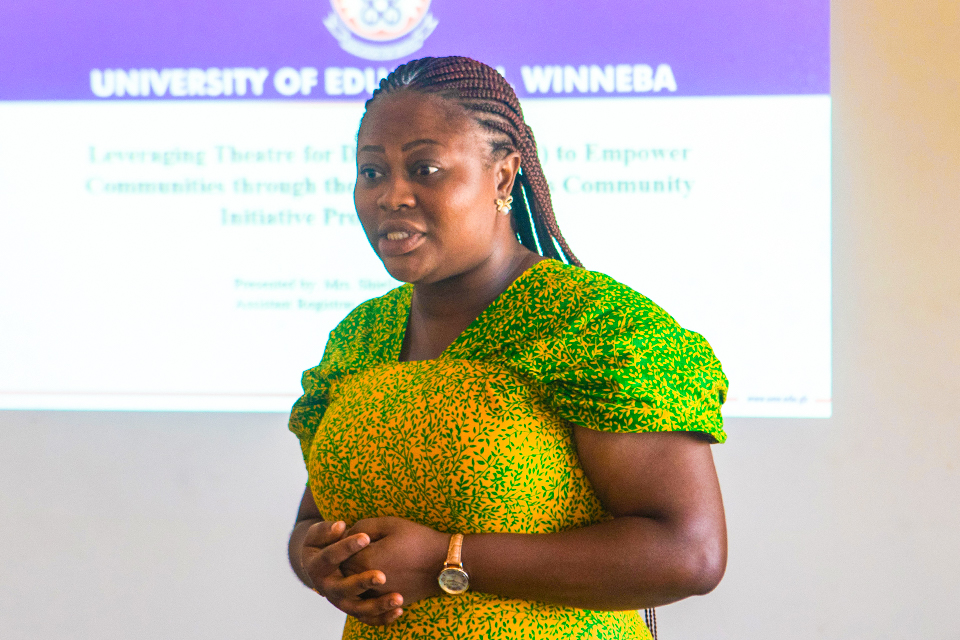
In her presentation, Mrs. Shiella Appiah-Kubi, an Assistant Registrar at the Directorate of Quality Assurance, introduced a compelling proposal on leveraging Theatre for Development (TfD) to strengthen the Vice-Chancellor’s Community Initiative Programme (VCCIP). Highlighting the transformative potential of participatory drama, Mrs. Shiella Appiah-Kubi emphasised that “development begins from the mind,” noting that when communities identify and dramatise their own challenges, they build ownership and sustainable solutions.
She illustrated this approach by recounting her experience working with a community that suffered exploitation by informal savings collectors. Through a TfD project, she helped catalyse the establishment of a local rural bank that continues to serve the community. Her proposal advocates integrating TfD into UEW’s initiatives—particularly in promoting STEM education, vocational apprenticeship and adult literacy—to bridge cultural divides and empower marginalised groups.
“Too often, we rely on a top-down approach. If we build a hospital without engaging the community, they might never enter it. TfD offers a culturally grounded way to communicate, to learn and to change mindsets,” she remarked.
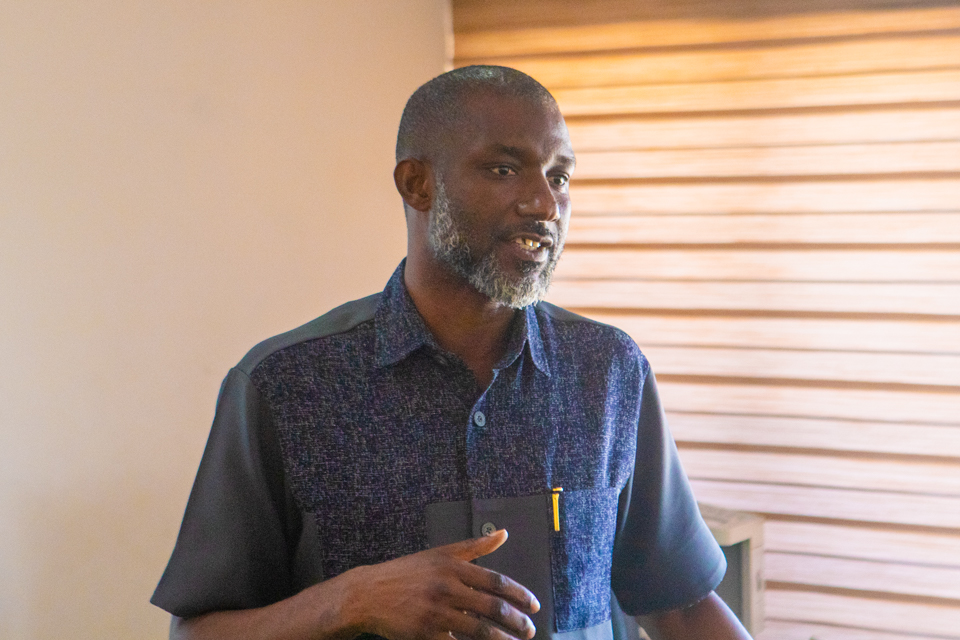
The seminar also focused on advancing digital transformation within UEW’s administrative functions. Mr. Samuel Krow Anim delivered a thought-provoking paper on “Advancing Administrative Effectiveness through Artificial Intelligence (AI),” calling for a structured integration of AI tools to enhance efficiency, responsiveness and data-driven decision-making across the institution.
Mr. Anim outlined how AI could streamline critical processes, including admissions, student records management, academic advising and communication systems. He cited global and local case studies, such as Georgia State University’s predictive analytics platform that improved student retention and Ashesi University’s AI pilots driving operational excellence.
“AI is not simply a tool—it is a catalyst for transformation. It enables real-time decisions, reduces clerical burdens and will position UEW to become a leader in innovative, responsive education,” Mr. Anim emphasised.
The proposal called for a clear policy framework, capacity-building programmes and pilot projects to ensure that AI deployment aligns with ethical standards and data protection regulations.
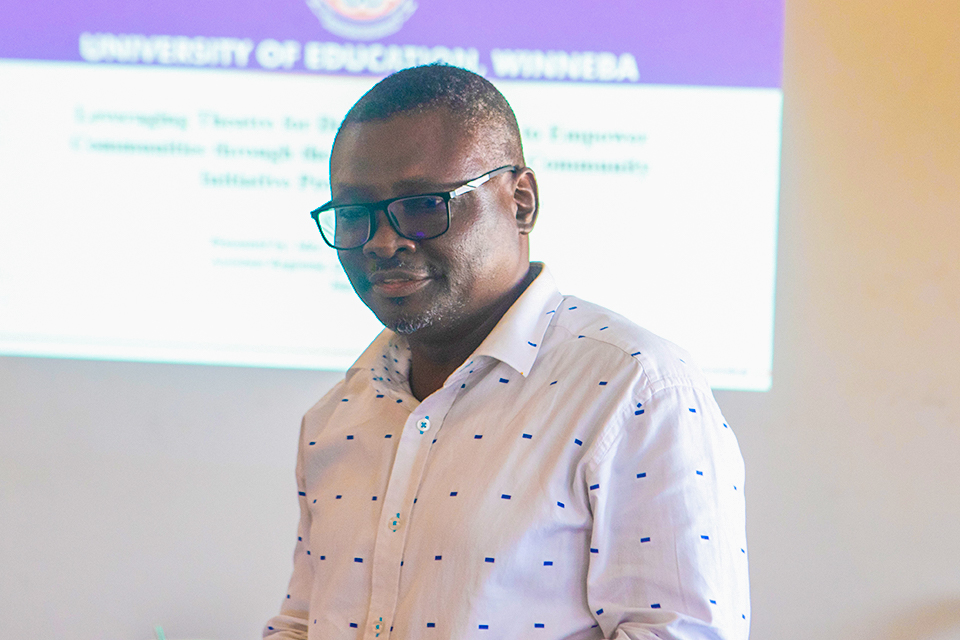
Mr. Jerry Addison Anyan, Deputy Registrar at the Division of Operations, who leads the Organising Committee for the Seminar Series, commended the presenters for their forward-thinking contributions and encouraged all participants to engage actively in refining these proposals.
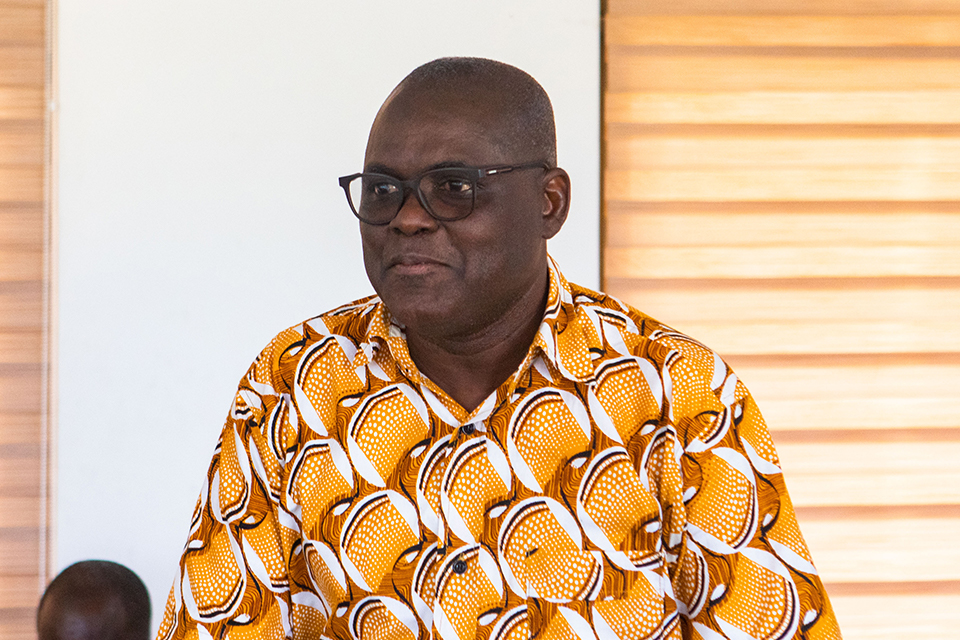
On his part, Mr. Steve v. Kamassah, Deputy Registrar at the Division of Publications and Communication and Chair for the event, underscored the importance of collective participation. “It is imperative that we not only attend but also contribute meaningfully,” he said, urging colleagues to read the materials thoroughly, prepare questions and consider how to integrate these insights into their professional practice.
As UEW continues to advance its mission of producing innovative educators and contributing to national development, the Registrar’s Seminar showcased the university’s resolve to blend tradition and technology. Through TfD and AI, UEW aims to build stronger community bonds, foster inclusive growth and secure its place as an internationally reputable institution committed to holistic empowerment.