UEW, SIC Explore Expanded Partnership to Safeguard University Assets


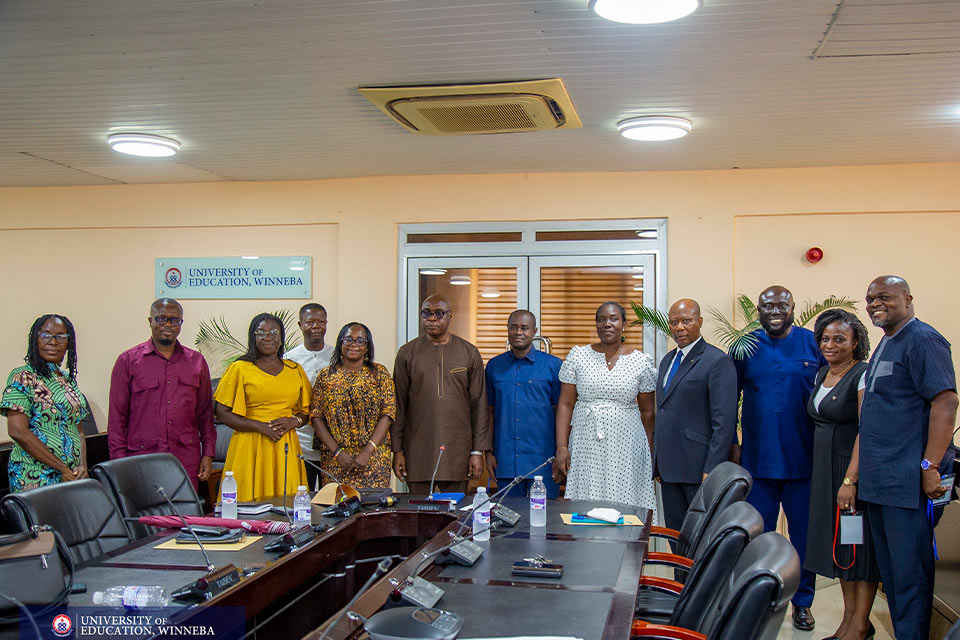
The University of Education, Winneba (UEW) and the State Insurance Company (SIC) have initiated discussions to strengthen their long-standing partnership with a focus on expanding insurance coverage, enhancing service delivery and exploring broader institutional collaboration.
This emerged during a meeting between UEW Management and a delegation from SIC at the Council Chamber on Monday, 13th April, 2026.
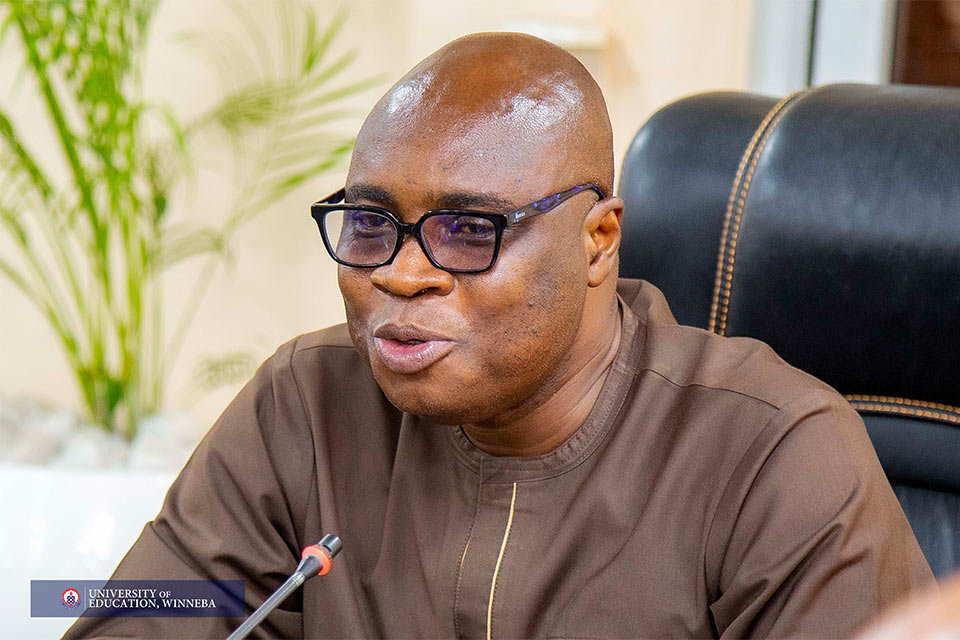
Prof. Stephen Jobson Mitchual, the Vice-Chancellor of UEW, reaffirmed the University’s commitment to strategic partnerships that support its mandate and operational growth. He underscored UEW’s reputation as Ghana’s foremost teacher education institution and noted that the University prioritises quality training.
Prof. Mitchual highlighted the University’s diverse academic strengths including special education, communication and media studies, business education, creative arts and information technology. He stressed that UEW continues to produce highly skilled graduates equipped with practical competencies. He indicated that the University was open to partnerships that would enhance its infrastructure, protect its assets and create additional value for students and staff.
He further expressed the University’s strong preference for supporting indigenous Ghanaian businesses, explaining that such partnerships contribute to retaining financial resources within the local economy. He invited SIC to present concrete proposals in areas of mutual benefit, particularly in asset insurance, student-focused schemes and other innovative service offerings.
The Vice-Chancellor also acknowledged past concerns regarding insurance claims processes but expressed optimism that industry improvements would translate into better service delivery. He encouraged a gradual but strategic expansion of SIC’s presence on campus including the possibility of establishing a visible institutional footprint and engaging students in entrepreneurial opportunities linked to the insurance sector.
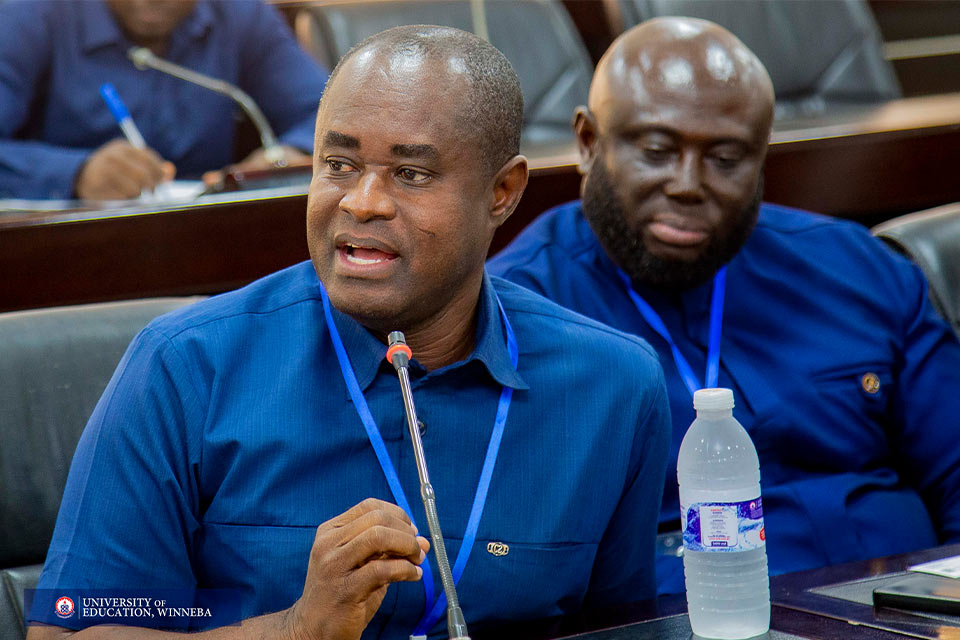
The Managing Director of SIC, Mr. James Agyenim-Boateng, described the visit as both a gesture of appreciation and a strategic effort to deepen collaboration with UEW. He commended the University’s longstanding contribution to education and skills development, noting that its impact extends beyond campus into surrounding communities.
Mr Agyenim-Boateng expressed gratitude to UEW for maintaining a business relationship with SIC over the years and appealed for an expansion of the company’s insurance portfolio within the University. He explained that SIC’s partial engagement over the past decade was not due to dissatisfaction with its services but rather historical changes in account management.
He assured the University of SIC’s credibility, financial strength and capacity to meet its obligations, emphasising that the company as Ghana’s largest indigenous insurer, offers reliability backed by state support. He added that SIC had significantly improved its claims processing systems with many claims now settled within 24 hours to three days while larger claims are handled with increased efficiency.
Mr. Agyenim-Boateng further noted that SIC’s enhanced operational efficiency and competitiveness had positioned it strongly within the insurance market, making it a dependable partner for large institutions such as UEW. He emphasised the company’s commitment to maintaining high service standards, particularly when dealing with institutions that shape future national leaders.
He also hinted at opportunities for corporate social responsibility initiatives, indicating that such interventions could be strengthened depending on the scale and depth of the partnership between the two institutions.
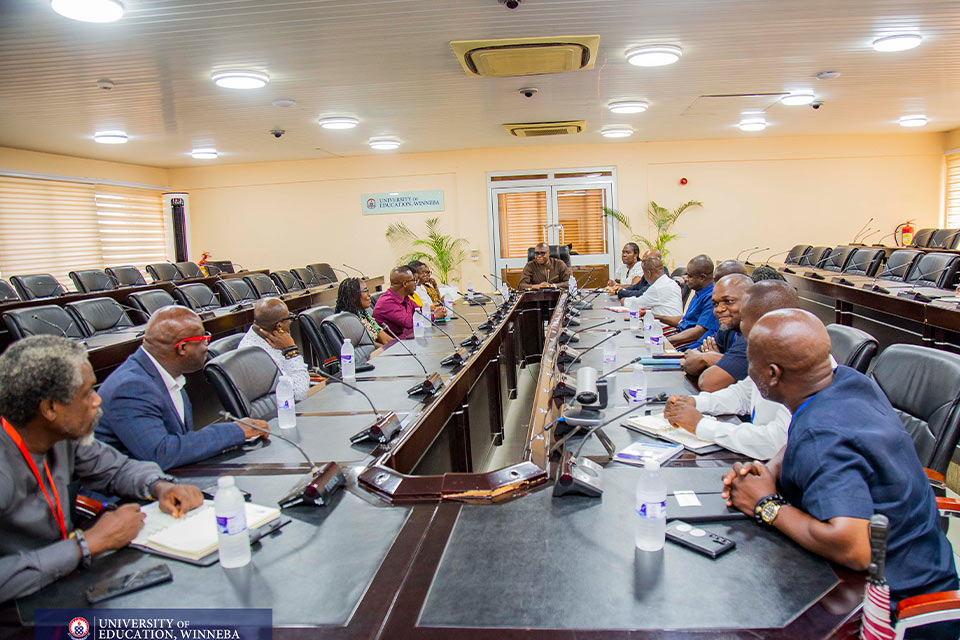
Both parties expressed optimism about the prospects of a renewed and expanded partnership, with discussions expected to continue at the technical level to identify specific areas of collaboration.
The meeting marks a significant step towards reinforcing UEW’s strategy of engaging credible indigenous institutions to support its operational needs while contributing to national economic development.