
UEW Management Engages Student Leaders on Key Issues



The Management of the University of Education, Winneba (UEW) on Wednesday, 21st January, 2026, engaged student leaders in a high-level consultative meeting at the Registrar’s Conference Room to address pressing issues affecting student welfare, campus security, institutional image and the protection of University property.
The meeting, marked by frank dialogue and policy clarification, underscored Management’s resolve to strengthen systems while deepening student leadership’s role in promoting responsible conduct across the University community.

Opening the engagement, Prof. Esther Yeboah Danso-Wiredu, the Pro-Vice-Chancellor, expressed concern over the increasing removal of chairs and other assets from lecture halls to private hostels. She revealed that investigations had confirmed that University property was being taken beyond campus boundaries, undermining teaching and learning.
In response, Management had commenced the construction of a perimeter wall around the South Campus to curb the practice and enhance security. However, she cautioned that infrastructure alone could not resolve the problem and called on student leaders to actively sensitise their colleagues on the ethical and collective responsibility to protect University property.
On healthcare delivery, Prof. Esther Danso-Wiredu acknowledged persistent complaints about long waiting times during medical examinations. She assured students that Management would engage the University Hospital to explore dedicating specific doctors or time slots to students during peak periods.
She also proposed introducing an appointment or booking system to improve efficiency and reduce delays. Clarifying emergency protocols, she explained that ambulances could be dispatched only upon a medical doctor's request and indicated that this policy would be formally communicated to the University community to avoid misunderstandings.
She further announced a firm policy shift: possession of a valid student ID card would be mandatory for all students, both fresh and continuing, to sit mid-semester and other examinations in the current academic year. Student leaders were tasked with widely communicating this directive to ensure full compliance.
Beyond compliance, she urged students to serve as Quality Assurance ambassadors by modelling positive conduct, wearing UEW-branded attire when officially directed and channelling grievances through internal mechanisms rather than social media. While acknowledging students’ right to raise concerns, she stressed that due process must be followed to safeguard the University’s reputation.

Prof. Emma Sarah Eshun, the Director of Quality Assurance, reinforced the welfare-centred thrust of Management’s position, stating that the University’s foremost priority was the health and safety of students. She noted that healthy students were better positioned to excel academically and return home safely.
She urged students to take medical examinations seriously and to fully utilise the free healthcare services at the University Hospital, explaining that medical clearance was not a bureaucratic hurdle but a foundational safeguard for student wellbeing.
Prof. Emma Eshun highlighted the security implications of proper identification, stressing that wearing student ID cards enhanced surveillance and enabled faster responses during emergencies. She linked issues of water safety, environmental cleanliness and illegal mining activities to public health risks and encouraged students to be environmentally conscious.
Emphasising that quality assurance was a shared responsibility, she called on students to embody UEW’s values and identity. She also encouraged students to wear UEW-branded attire on Fridays to project institutional pride and promote the University as a centre of excellence in Ghana and beyond.
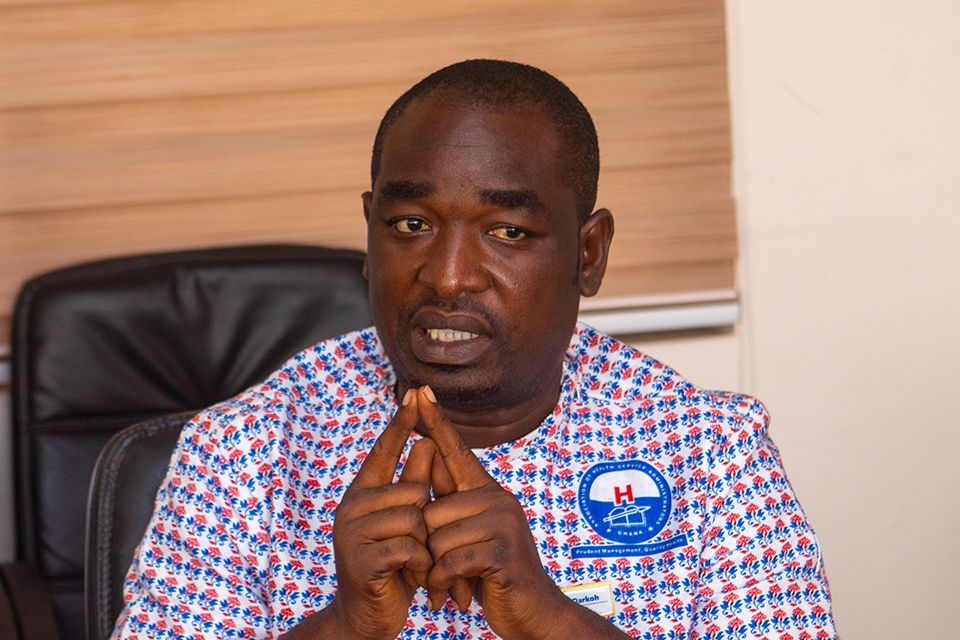
Mr. Isaac Darkoh, Head of Administration of the University Hospital Services Directorate (UHSD), clarified that all medical examinations must be conducted at the University Hospital to ensure accuracy, efficiency and proper documentation. He noted that X-rays were taken instantly and uploaded directly into the system, eliminating delays associated with external facilities. He justified the subsidised GH₵100 X-ray fee as significantly lower than charges at private hospitals and reminded students that the cost was clearly stated in admission letters.
Mr. Darkoh outlined the comprehensive nature of the medical screening process which includes laboratory tests, audiology services, ear and lung examinations and a final medical review by a doctor. He stressed that medical clearance was incomplete until a student had been examined by a doctor, cautioning against the misconception that laboratory tests alone signified completion. He explained that student ID cards were issued only after full medical clearance to enforce compliance, noting that the backlog of uncollected ID cards from previous academic years demonstrated the need for stricter enforcement.
He underscored the public-health value of screening, citing cases in which tuberculosis had been detected during examinations, enabling early intervention to protect the wider University community. He also highlighted the importance of maintaining accurate medical records for effective emergency response. He encouraged students to utilise University healthcare services instead of seeking treatment externally at a higher personal cost.
Addressing preventive healthcare, Mr. Darkoh advised students to avoid unhygienic and flood-prone environments, remain attentive to mental health issues and support colleagues who might be at risk. He stressed that early detection of warning signs could prevent tragic outcomes and save lives.
Overall, the meeting served as a critical platform for alignment between Management and student leadership. It reinforced a shared responsibility for protecting University property, improving healthcare delivery, strengthening campus security, promoting responsible conduct and safeguarding UEW’s institutional image. The engagement made clear that while Management would continue to invest in infrastructure, systems and policy reforms, sustainable change would ultimately depend on informed, disciplined and ethically grounded student leadership.