CCERPD-UEW Trains Healthcare Workers in Patient Communication Skills


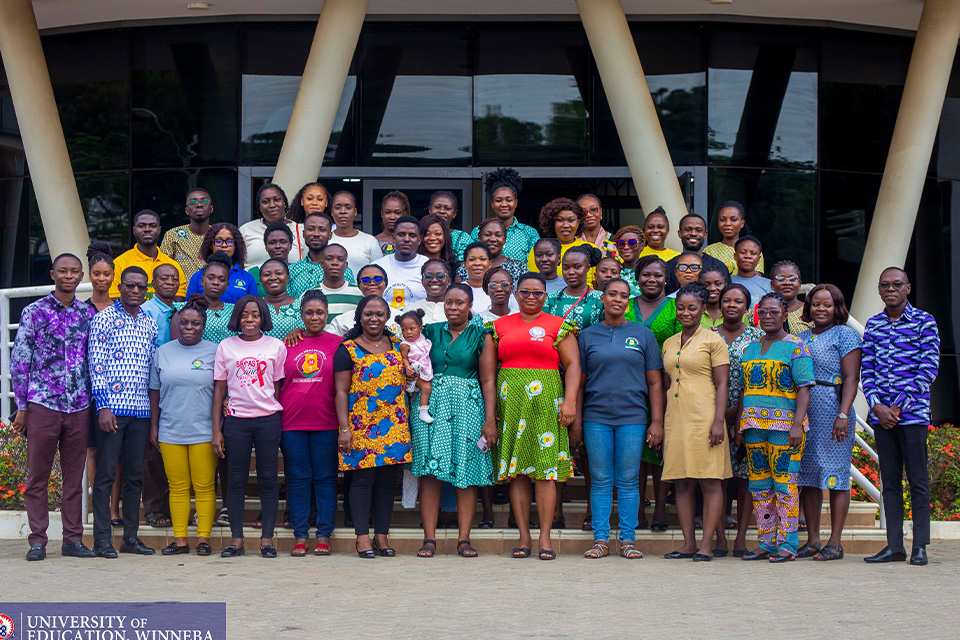
The Centre for Communication Education Research and Professional Development (CCERPD), of the School of Communication and Media Studies (SCMS), University of Education, Winneba (UEW), has organised a capacity-building workshop aimed at improving patient communication among health practitioners.
The workshop, held at the Students Centre Seminar Room III on Wednesday, 6th May, 2026, was themed “Care Beyond Treatment: Mastering Patient Communication Skills.”

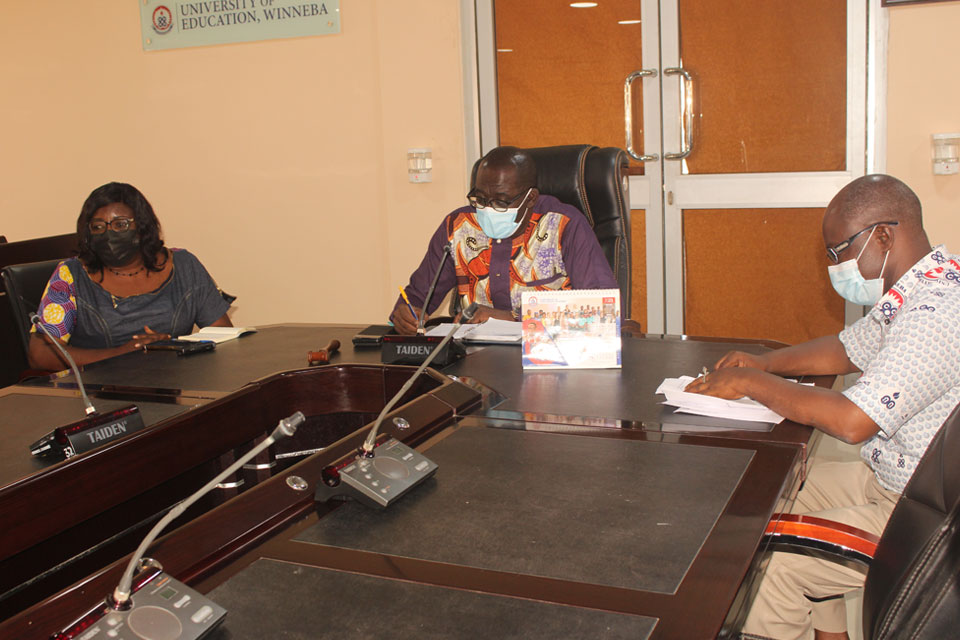
Delivering the welcome address, Prof. Albert Agbesi Wornyo, the Dean of SCMS, underscored the critical role of effective communication in healthcare delivery. He emphasised that UEW, though widely recognised for teacher education also plays a significant role in areas such as health communication, journalism and development communication.
Prof. Wornyo highlighted the University’s interest in fostering long-term collaboration with health professionals to inform research, teaching and policy development. He explained that the workshop forms part of ongoing efforts to bridge the gap between academia and professional practice, particularly in understanding patient concerns and improving healthcare outcomes through communication.
According to him, communication in healthcare extends beyond the mere transfer of information to include empathy, clarity, cultural sensitivity and active engagement with patients.
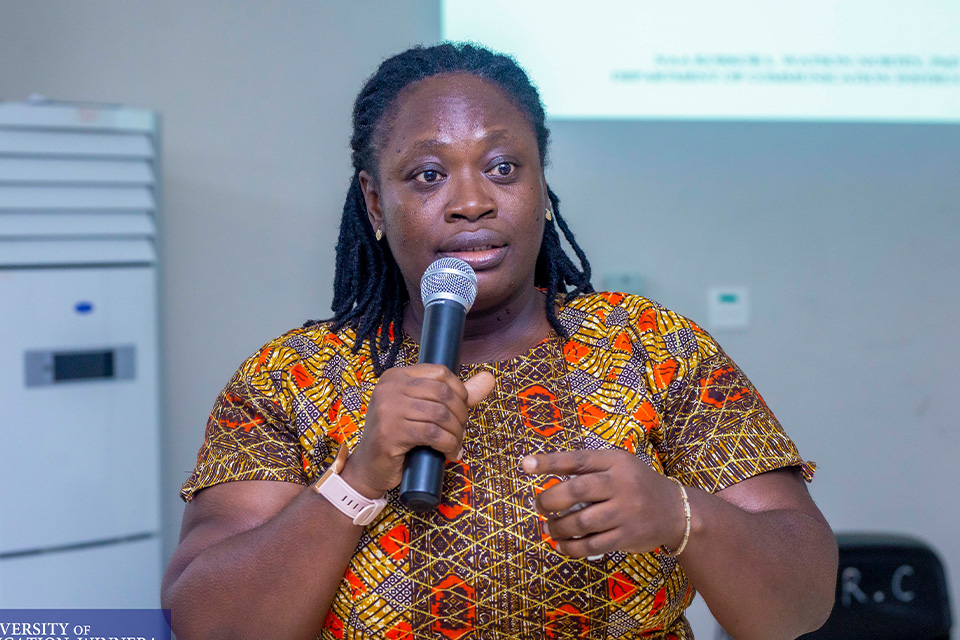
The first presentation, delivered by Dr. Naa Korkor Watson Nortey, the Head of the Department of Communication Instruction, focused on “Listening: The Smallest Skill That Makes the Biggest Difference.” She stressed that listening is the foundation of effective communication. She noted that while many practitioners hear patients, few truly listen. Drawing on the concept of the four language skills listening, speaking, reading and writing, she explained that listening is the first and most essential skill in human communication.
Dr. Naa Nortey distinguished between hearing and active listening, describing hearing as passive and accidental while listening requires intentional focus and effort. She highlighted common barriers to effective listening including noise, distractions, biases and limited attention spans. Using practical scenarios, she demonstrated how poor listening can lead to misunderstandings, patient dissatisfaction and compromised care.
She further introduced practical listening techniques such as maintaining eye contact, avoiding interruptions, observing non-verbal cues and asking clarifying questions. Emphasising empathy, she urged health professionals to understand patients’ emotions and concerns, noting that effective listening can significantly improve patient trust, compliance and overall satisfaction. She encouraged participants to reflect on their listening styles and adopt more patient-centred communication approaches.

The second presentation was delivered by Prof. Patricia Mawusi Amos, the Dean of the Faculty of Applied Behavioural Sciences in Education, on the topic “Emotional Intelligence Among Patients and Health Providers.” She highlighted emotional intelligence as a critical component of patient-centred care, defining it as the ability to recognise, understand and manage one’s own emotions as well as those of others.
Prof. Patricia Amos emphasised that healthcare professionals often interact with patients who are anxious, fearful or vulnerable, making emotional intelligence essential for effective engagement. She outlined key components of emotional intelligence including self-awareness, self-regulation, motivation, empathy and social skills.
According to her, healthcare providers must be conscious of their own emotional states and ensure that personal feelings do not negatively impact patient care. Drawing from personal and professional experiences, she illustrated how poor emotional management and lack of empathy can adversely affect patient outcomes. She stressed that beyond medical treatment, the attitude and behaviour of healthcare providers play a significant role in healing. “It is not only the medicine but the way you treat patients that contributes to recovery,” she noted.
Prof. Patricia Amos also addressed the emotional challenges faced by healthcare workers such as stress, burnout, time pressure and difficult patient interactions. She encouraged practitioners to develop coping strategies, support one another and remain intrinsically motivated in their roles. She further highlighted the importance of clear communication, cultural sensitivity and patience in dealing with diverse patient populations.
The workshop provided a platform for interaction, reflection and knowledge sharing among participants. Through discussions and practical exercises, participants explored ways to improve communication practices in healthcare settings, particularly in addressing patient fears, clarifying medical information and enhancing empathy.
The initiative reflects SCMS’ commitment to interdisciplinary collaboration and its broader mandate to contribute to national development through research, training and community engagement. By equipping health professionals with advanced communication and emotional intelligence skills, the School aims to promote more effective, humane and patient-centred healthcare delivery.