UEW Holds Workshop to Disseminate Revised Research Policy



The University of Education, Winneba (UEW), on Tuesday, 7th October, 2025, held a dissemination workshop on its revised Research Policy at the Jophus Anamuah-Mensah Conference Centre, North Campus, Winneba.
The workshop aimed to share the updated policy framework with members of the University community and enable participants to provide input on its adoption and implementation.

In delivering the welcome address, Mrs. Ekua Abedi-Boafo, Registrar of UEW, stated that the purpose of the gathering was to disseminate the revised Research Policy of the university. She emphasised that universities exist to create and share knowledge through research and noted that Management had constituted a committee to review the existing policy to align it with current developments and practices. She expressed hope that participants would contribute meaningfully to improve the policy for the benefit of the institution.
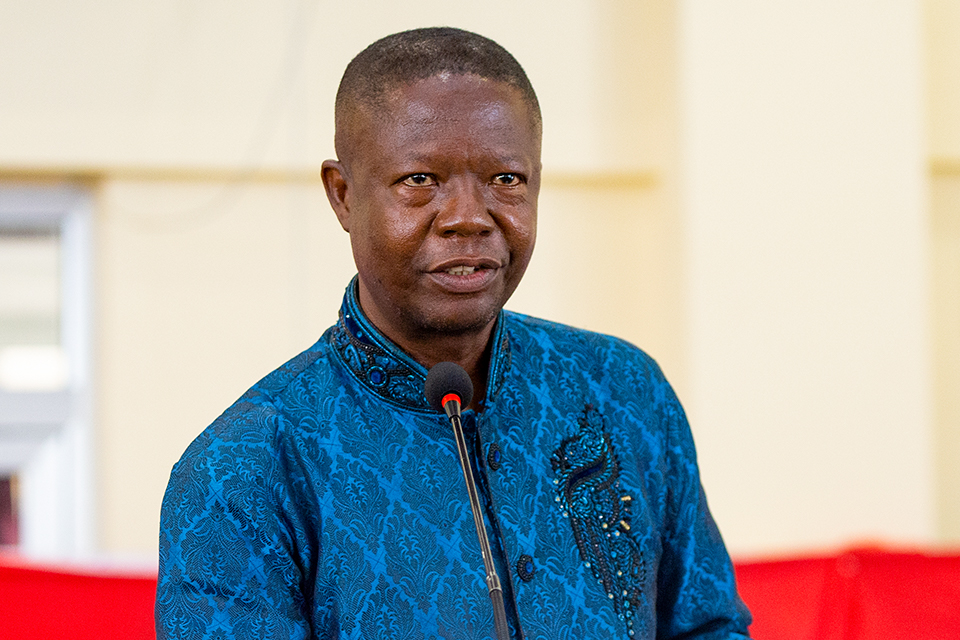
In his opening remarks, Prof. Frimpong Kaakyire Duku, Principal of the College for Distance and e-Learning (CODeL), who chaired the programme on behalf of the Vice-Chancellor, read a keynote address from the Vice-Chancellor. The Vice-Chancellor described the workshop as a moment of renewal and a new chapter in UEW’s collective research journey. He noted that the revision of the 2010 Research Policy, initiated in March 2024, followed months of consultations and was subsequently approved by the Academic Board.
He urged participants to take ownership of the policy and use it as a compass in supervising students, applying for grants and collaborating across disciplines. “Policies do not make universities great; people do. But great people need great policies to shine,” he stated, stressing that the policy reflects UEW’s aspiration to become a fully-fledged research university that contributes meaningfully to national and international development.
Prof. Duku recommended that all university policies should go through similar workshops to allow for stakeholder input and ownership. Referring to one of the presentations, he stressed that the new policy provides pathways such as mentorship and conferences to help build researchers’ capacities.
He further emphasised the importance of transparency, accountability and institutional support in implementing the policy, urging the relevant bodies to act appropriately to promote its smooth operation.

The first presentation was delivered by Prof. (Mrs.) Emma Sarah Eshun, Director of Quality Assurance, who outlined the key components of the revised policy. She explained that the review was necessary to align the University’s research activities with its corporate strategic plan and global best practices.
She highlighted the policy’s objectives which include promoting high-quality and innovative research, ensuring ethical conduct, commercialising research outcomes and fostering professional development among researchers. She elaborated on the University’s research support structures such as the Directorate of Research, Innovation and Development (DRID); the Institute for Educational Research and Innovation Studies (IERIS); the School of Graduate Studies; the Academic Board; the Board of Graduate Studies; the Research, Conferences and Scholarships Committee and the Institutional Review Board (IRB).
Prof. Emma Eshun also underscored the importance of interdisciplinary collaboration, transparency, accountability and adherence to the Sustainable Development Goals (SDGs) in research. She emphasised that the revised policy discourages honorary authorship and promotes peer review, mentorship and ethical responsibility.
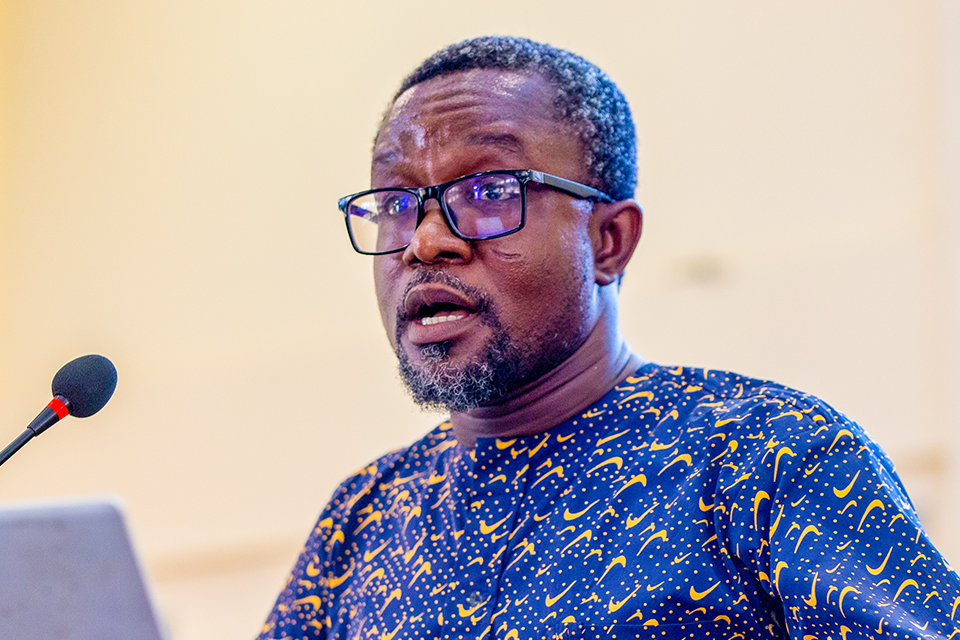
The second presentation was delivered by Prof. Akwasi Kwarteng Amoako-Gyampah, Vice-Dean of the School of Graduate Studies, who discussed provisions on data protection, quality assurance, research integrity, intellectual property and financial obligations. He explained that the University and researchers share rights to access and use data from internally funded research with DRID responsible for storing and protecting such data.
He further highlighted mechanisms for ensuring quality and integrity including mentorship, peer review and periodic appraisals. The policy, he noted, defines research misconduct as fabrication, falsification, plagiarism and other dishonest practices and outlines procedures for enquiry and investigation when misconduct is suspected.
Prof. Amoako-Gyampah added that the policy provides guidelines on ownership and licensing of intellectual works, shared ownership of inventions and the management of research equipment and sponsored assets. It also outlines financial accountability measures, including a 15% management charge on externally funded research and stresses mentorship, postdoctoral training and support for junior researchers as essential for building research capacity. The revised policy, he concluded, is expected to be reviewed every five years to remain responsive to emerging trends.
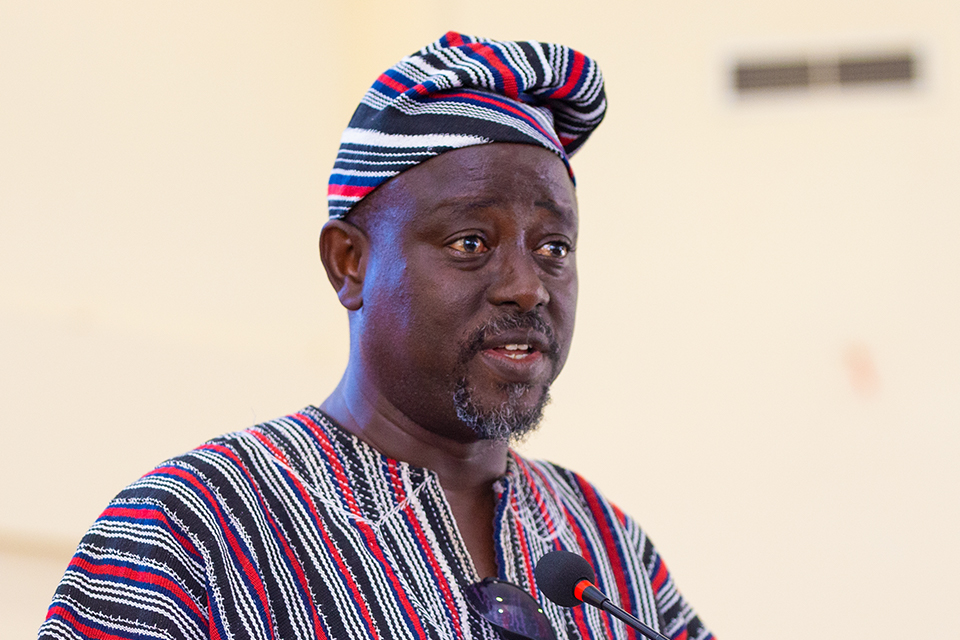
A vote of thanks was delivered by Mr. Collins Awuku, General Manager of Radio Windy Bay and Master of Ceremony, who expressed appreciation to the committee that developed the document, Management, deans, directors and participants for their contributions. He commended the Registrar for her leadership in organising the session and acknowledged the efforts of all who supported the successful hosting of the workshop.