SPED Students Showcase Innovative Instructional Aids for Inclusive Education


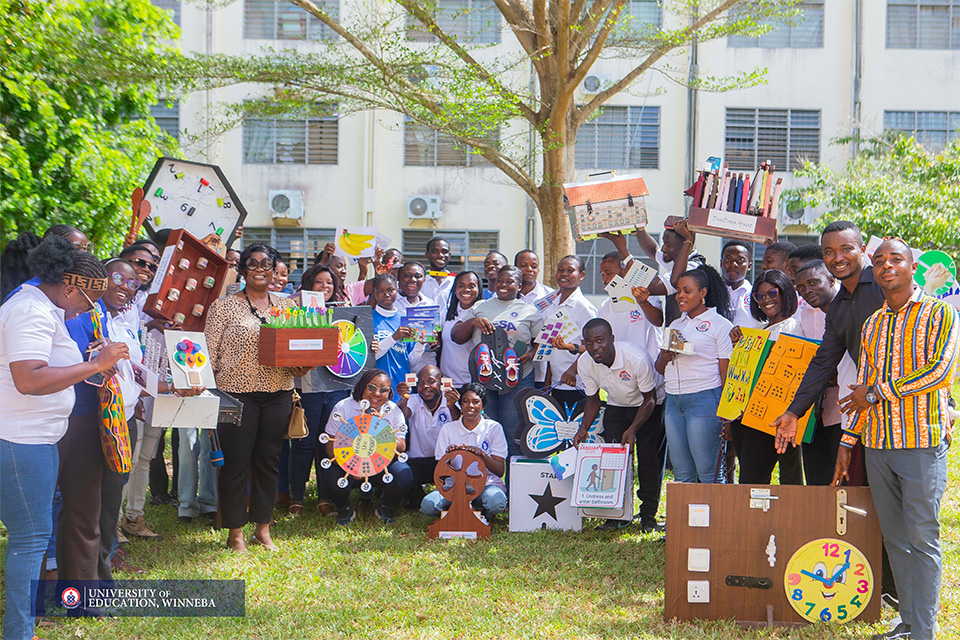
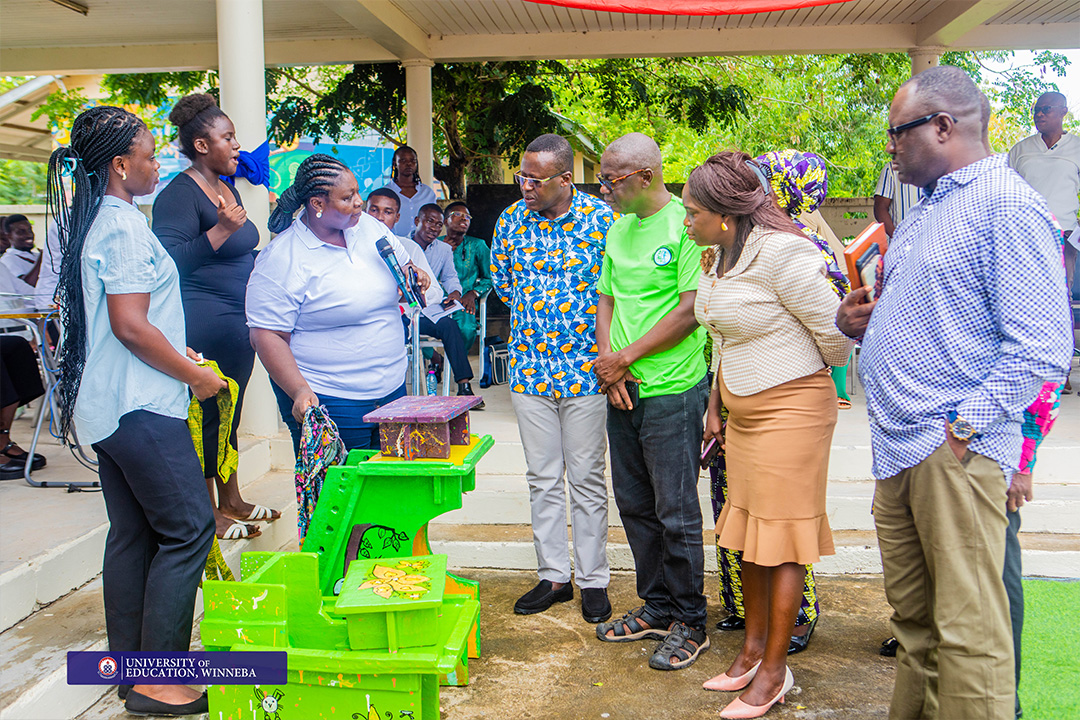
The Department of Special Education (SPED) at the University of Education, Winneba (UEW) held an exhibition of instructional aids designed to support inclusive education. The exhibition reaffirms the Department’s commitment to advancing equitable learning for persons with special educational needs.
The event, organised at the Faculty of Social Sciences Education Park on Friday, 27th March, 2026, brought together faculty, administrators, students and stakeholders to witness innovative, low-cost teaching and learning materials developed by Level 300 students.

Dr. Florence Akua Mensah, Vice-Dean of the Faculty of Applied Behavioural Sciences in Education (FABSE), explained that the exhibition forms part of the Department’s practical training framework.
She noted that students are equipped from Level 200 with skills in teaching, monitoring, assessment and placement of learners with intellectual disabilities. This, she explained, they apply in Level 300 through the design of targeted instructional strategies. She emphasised that the instructional aids on display were developed using locally sourced materials that are affordable, durable and adaptable, aligning with global efforts to promote inclusive and quality education for all.
Dr. Florence Mensah highlighted that the initiative not only enhances the professional competence of students but also positions them as resource persons capable of supporting parents, caregivers and institutions in addressing the learning needs of children with disabilities. She encouraged members of the University community to engage with the exhibits, offer feedback and motivate the students.
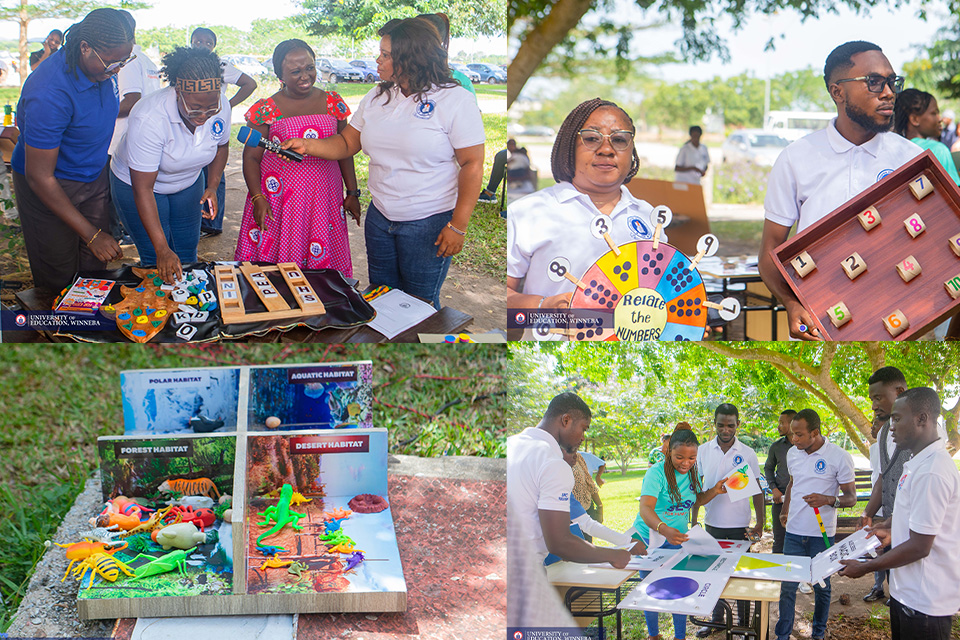
The exhibition featured five thematic stations, each demonstrating specialised instructional tools tailored to different categories of learners with Section A, led by Nii Noi Nortey, presenting adaptive mathematics tools for learners with cerebral palsy, communication aids for individuals with autism and visual-based learning materials to enhance coordination, sensory development and numeracy skills while stressing the integration of cognitive and motor skill development.
Section B, led by Ezra Perpetual Agbley, showcased hands-on learning tools such as manipulable cubes, flashcards, sorting materials, multi-task boxes and a shoe-lacing model. These resources support concept formation, counting, colour identification, imitation skills and independence in daily living, particularly for learners with developmental delays, autism spectrum disorder and cerebral palsy.
Section C, led by Jessica Doku, highlighted instructional aids such as hygiene charts, fruit identification tools, shape recognition boards and home management models designed to promote daily living skills, environmental awareness, independence and social integration. Meanwhile, Section D, led by Mercy Jabab, showcased multi-instructional aids including interactive boards and communication books to enhance numeracy, communication, social interaction and behaviour management among learners with autism through play-based learning.
Section E, led by Loveranda Beble, showcased adaptive materials including tactile books, dressing aids and hygiene kits, designed with learner-friendly textures and colours. These materials support engagement, particularly for learners with short attention spans while promoting the development of dressing, counting, colour recognition and personal hygiene skills.

Course facilitator Mr. Enoch Ansah commended the students for their creativity and dedication. He noted that the primary objective of the initiative is to leverage innovation and technology to improve teaching and learning outcomes for individuals with special educational needs. He further indicated that beyond pedagogy, the production of instructional aids presents entrepreneurial opportunities for students, enabling them to generate income while contributing to society.
The exhibition underscored UEW’s leadership in teacher education and its ongoing commitment to inclusive education. It also highlighted the critical role of innovation, practical training and community engagement in preparing future educators to meet diverse learning needs.