UEW Researchers Seek Government Support to Expand Climate-Fishing School Initiative


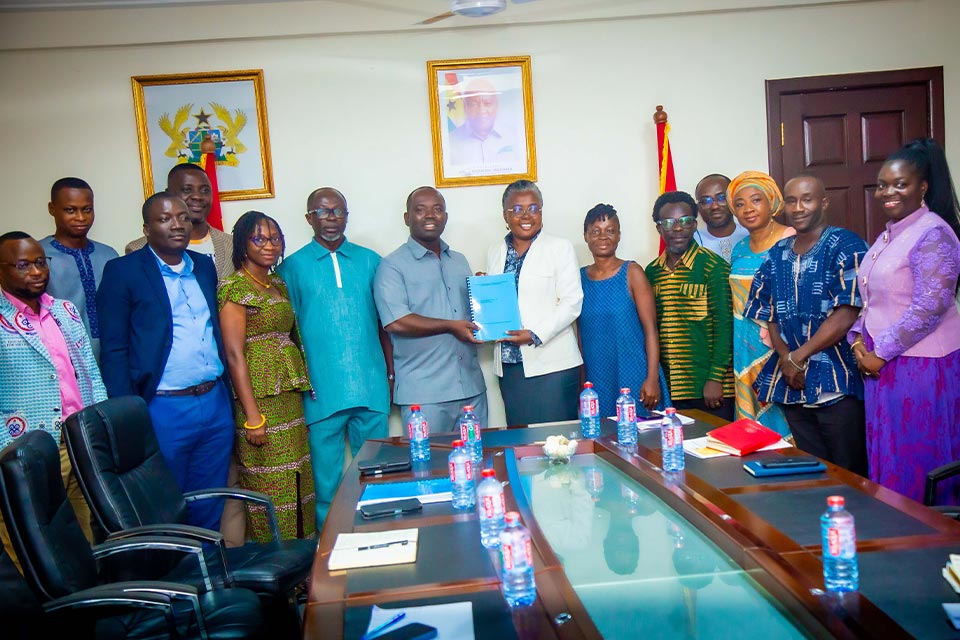
A team of researchers from the University of Education, Winneba (UEW) has presented a pioneering Climate-Fishing Model School (C-FMS) initiative to the Ministry of Fisheries and Aquaculture and has sought strategic support for its nationwide implementation.
The high-level meeting, held on Wednesday, 29th April, 2026, provided a platform for the University to showcase research-driven solutions to strengthen Ghana’s artisanal fisheries sector in the face of climate change and environmental pressures.
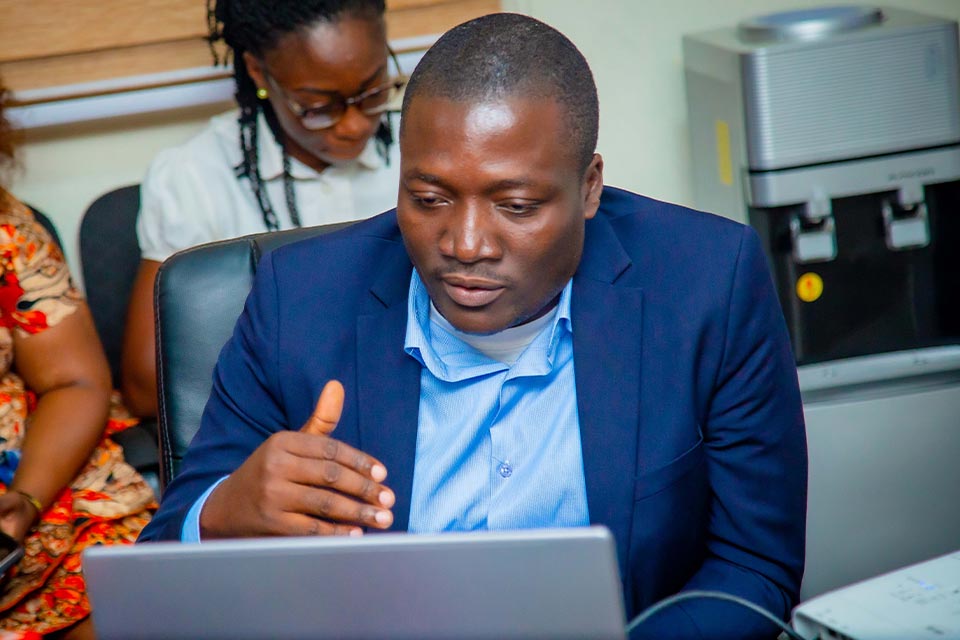
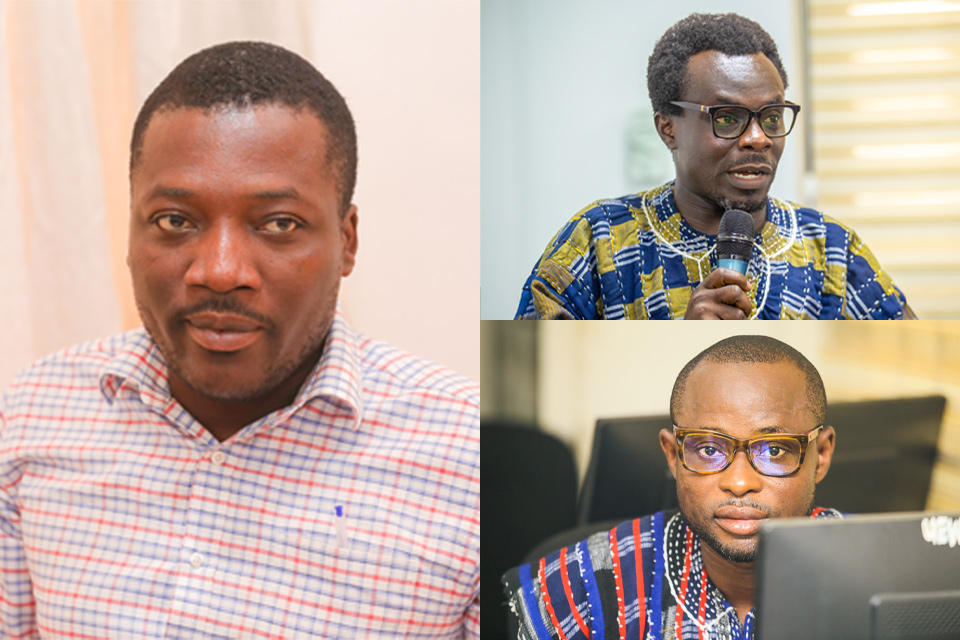
Dr. Victor Owusu, Project Lead, who led the presentation, highlighted the importance of the fisheries sector to Ghana’s economy. He noted that it employs approximately three million people and contributes over 4% to the country’s Gross Domestic Product (GDP). He added that more than 60% of Ghanaians depend on fish as a primary source of protein, underscoring the need for sustainable management of the sector.
Despite its significance, Dr. Owusu observed that artisanal fisheries largely rely on traditional practices and indigenous knowledge systems, which, while valuable, require integration with scientific approaches to address emerging climate and environmental challenges. He explained that the Climate-Fishing Model School initiative seeks to bridge this gap by creating a collaborative learning platform for fisherfolk and key stakeholders.
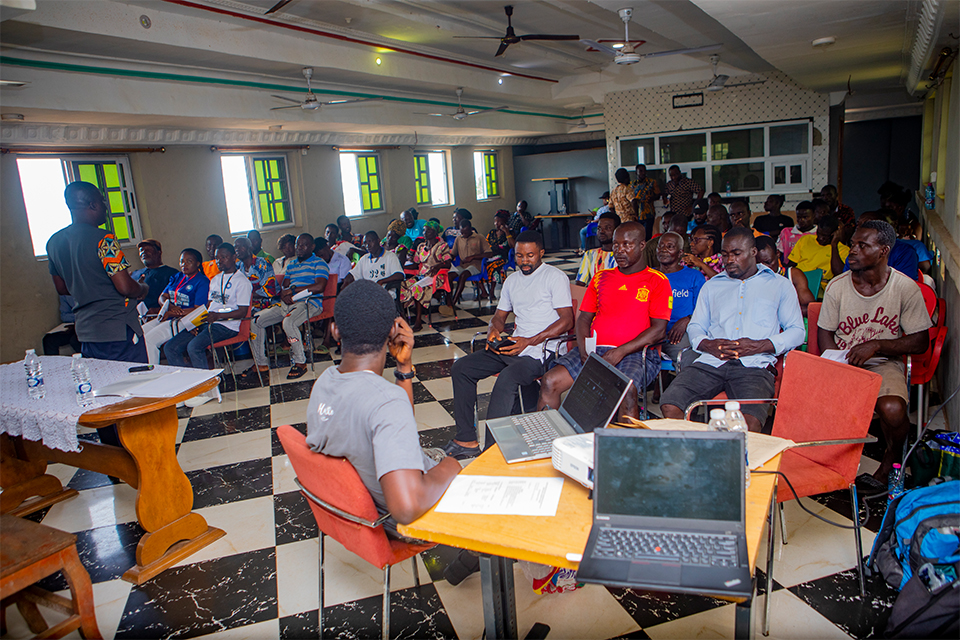
“The model school is designed as a community-based adult education platform where fisherfolk—canoe owners, chief fishermen, processors and traders—can share their experiences and learn practical strategies for sustainable fisheries management,” he said.
According to him, the initiative focuses on building resilience among coastal communities by combining traditional marine ecological knowledge with scientific insights on climate change, weather forecasting and sustainable fishing practices.
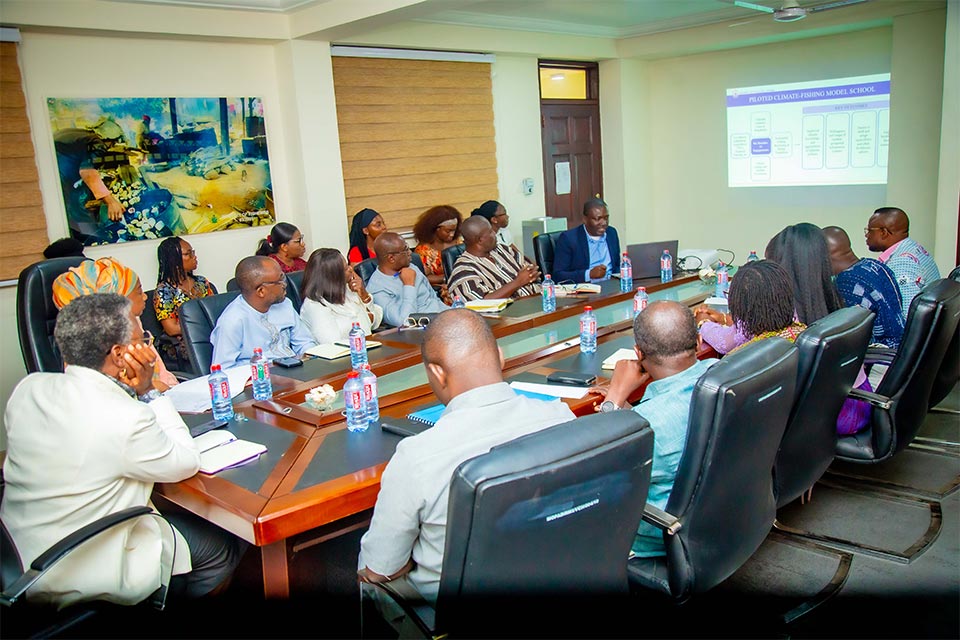
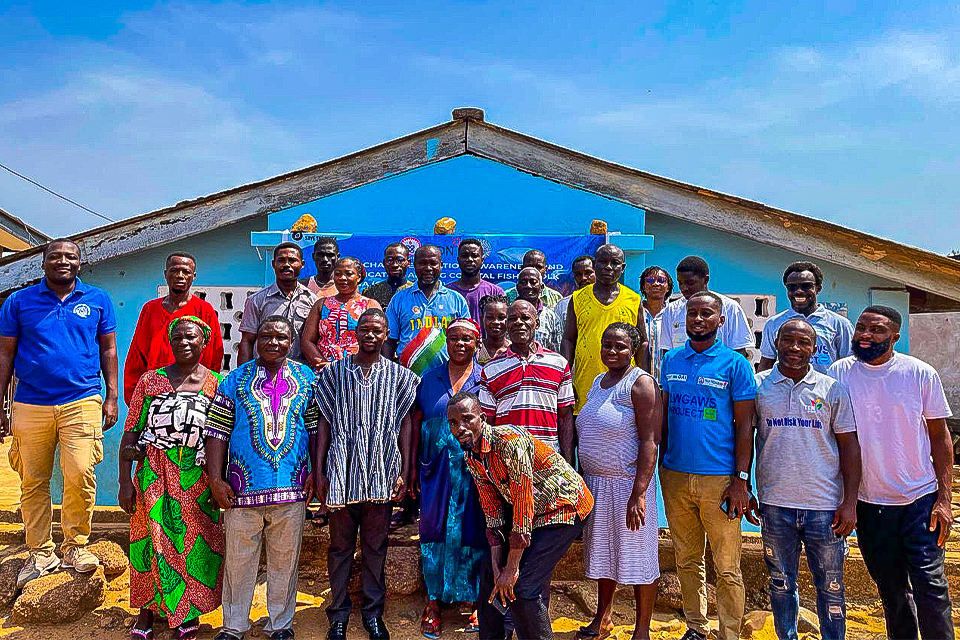
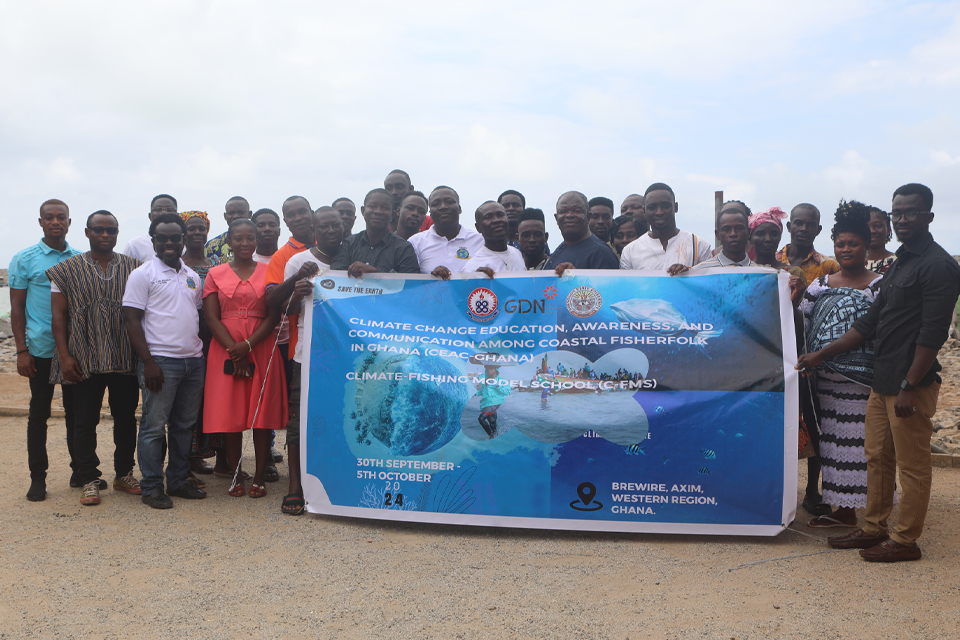
Dr. Owusu disclosed that the project was successfully piloted in 2023 in Axim, where 40 fisherfolk from two communities, Brewire and Amanfumkumanu, participated in a two-week intensive training programme. The pilot, implemented in collaboration with the Fisheries Commission, the Ghana Meteorological Agency, the Nzema East Municipal Assembly and media partners produced significant outcomes.
He observed that participants demonstrated improved understanding of climate change, fisheries regulations and sustainable practices including the enforcement of policies such as the closed fishing season. “The training also enhanced their appreciation for weather forecasting tools, including mobile-based systems that provide real-time sea condition updates. Fisherfolk who initially perceived aquaculture as complex and capital-intensive came to realise that small-scale fish farming is accessible and viable with the right knowledge and support,” he asserted.
The pilot programme further strengthened financial literacy among participants with many adopting improved bookkeeping practices to better manage income during peak fishing seasons. Building on these outcomes, the UEW team is seeking to scale the initiative to eight coastal communities across four regions alongside plans to secure accreditation for the programme and develop a structured training framework for facilitators including teachers and fisheries extension officers.
Dr. Owusu emphasised that UEW possesses the multidisciplinary capacity to drive the initiative, citing expertise in climate science, fisheries, agriculture, curriculum development and business management as well as experience in managing international research grants.
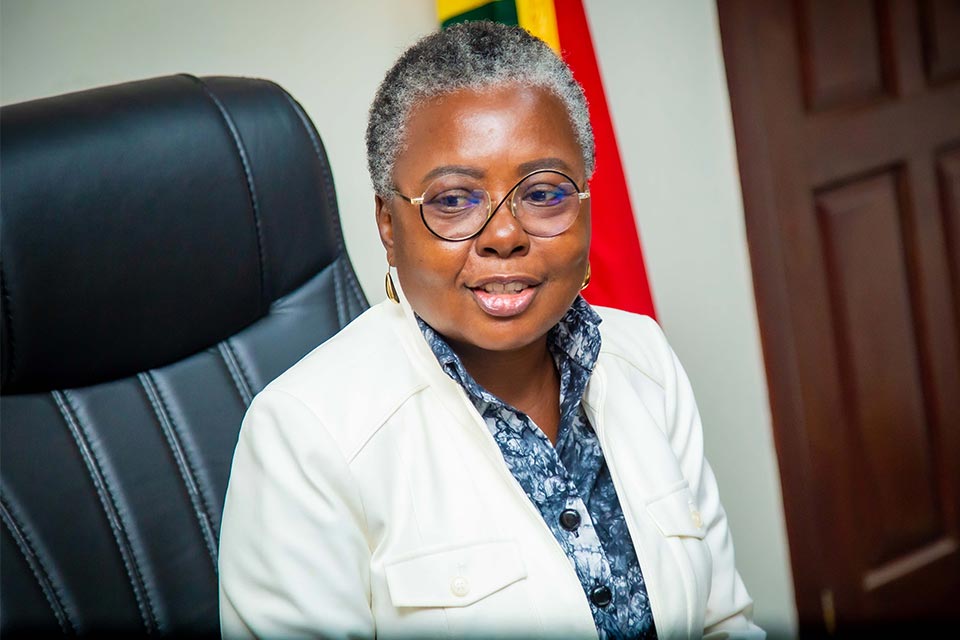
Responding to the presentation, Hon. Emelia Arthur, the Minister for Fisheries and Aquaculture, commended the UEW team for the innovative approach and expressed strong interest in collaborating with the University.
She revealed that government is in the process of transforming the Anomabo Fisheries College into the Ghana National Institute of Fisheries with Cabinet approval already secured for its new structure, curriculum and governance framework. The institute is expected to operate as a hands-on training hub for the sector.
“I see clear opportunities for partnership between your model and the institute, particularly given your community-based approach,” she stated, noting that the government is keen to broaden collaboration with academic institutions across the country.
Hon. Emelia Arthur further indicated that the Ministry is open to formalising the partnership through a Memorandum of Understanding (MoU) with UEW, with implementation support from the Fisheries Commission as the sector’s technical arm.
She also underscored the importance of public education on marine conservation. She stressed that misconceptions about ocean pollution continue to threaten sustainability efforts. “The sea gives back what we put into it, so education and awareness are critical,” she cautioned.
The engagement marks a significant step towards integrating research, policy and community-based interventions to address challenges in Ghana’s fisheries sector. It also reinforces UEW’s expanding role beyond teacher education into applied research and national development.