FHASHEE Pioneers Strategic Plan Accountability Through Monitoring and Evaluation Durbar


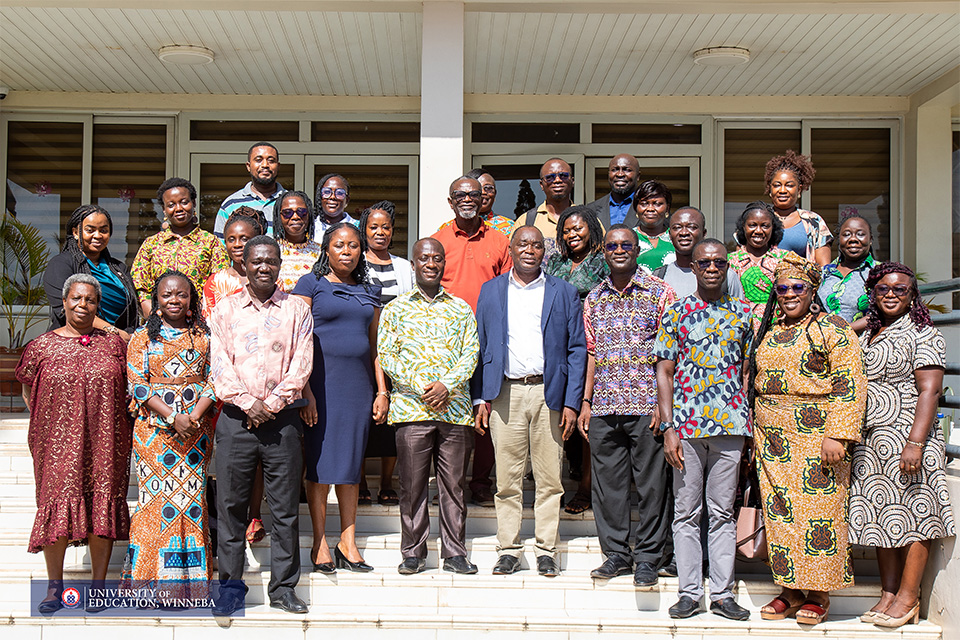
The Faculty of Health, Allied Sciences and Home Economics Education (FHASHEE) at the University of Education, Winneba (UEW) has taken a step to deepen accountability and strengthen institutional performance by organising its maiden Strategic Plan Monitoring and Evaluation Durbar.
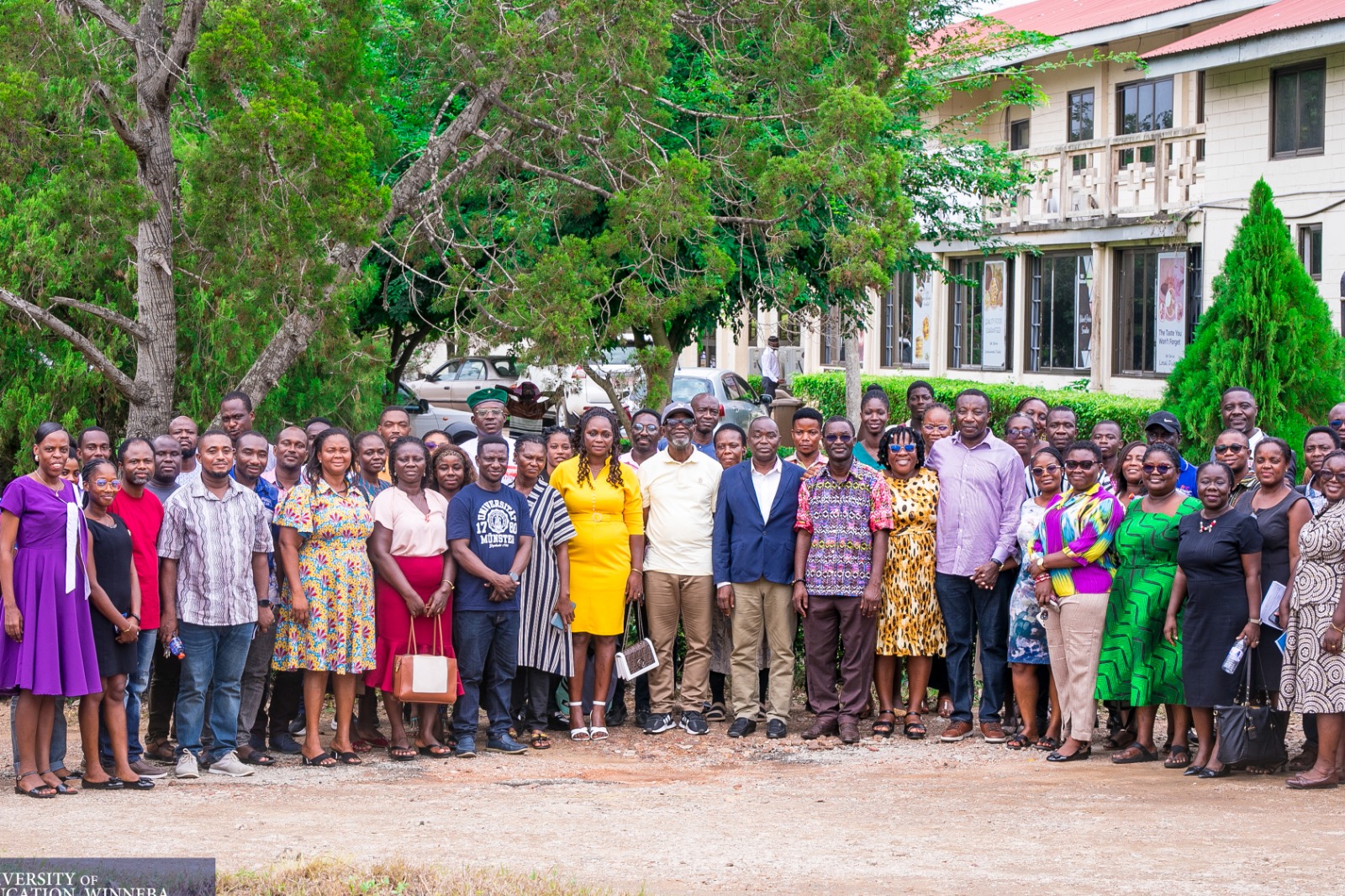
The event, held at the North Campus Mini-Conference Room on Wednesday, 18th March, 2026, brought together faculty leadership, Heads of Department (HoDs), faculty and administrators to critically assess the implementation of departmental operational plans in line with the University’s 2025–2030 Strategic Plan.
The durbar, the first of its kind at the university, featured structured presentations by HoDs, who reported on progress made, key achievements, challenges encountered and strategies for improvement using a standardised reporting template.
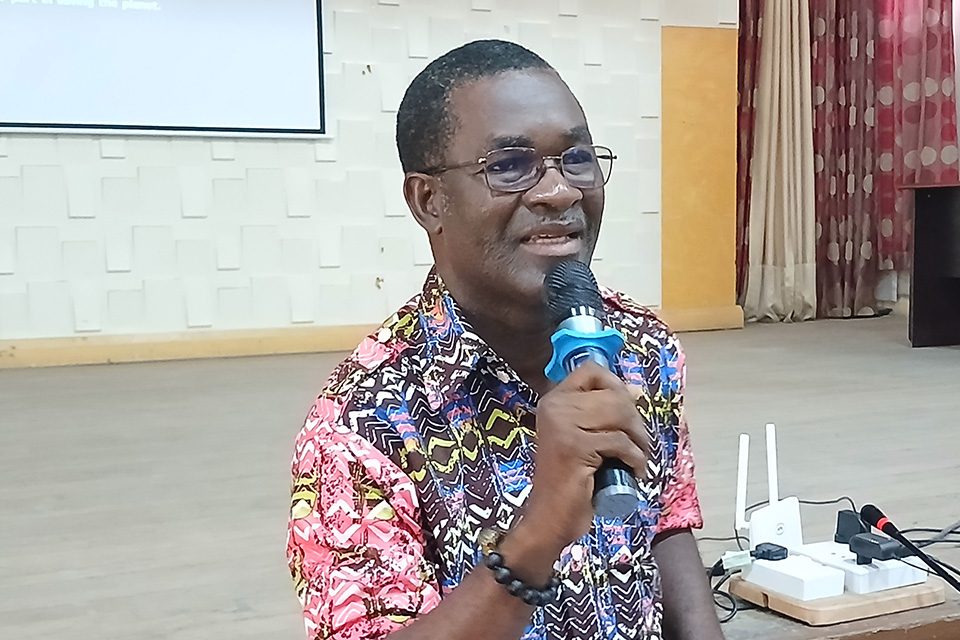
Welcoming participants, Prof. Fred Yao Gbagbo, the Dean of FHASHEE, described the durbar as a significant milestone in the faculty’s quest to remain focused on its strategic direction and deliver on its mandate. He emphasised that strategic planning without monitoring and evaluation risks rendering institutional efforts ineffective, stressing the importance of periodic assessment to ensure progress and realignment where necessary.
According to him, the faculty’s initiative reflects a conscious effort to interrogate its own performance, celebrate successes and address shortfalls with honesty and urgency. Prof. Gbagbo commended the Heads of Department for demonstrating leadership and courage in presenting their performance reports, noting that such transparency is indicative of a results-oriented academic culture. He reiterated that understanding where the faculty stands in relation to its goals is essential to achieving its long-term vision.
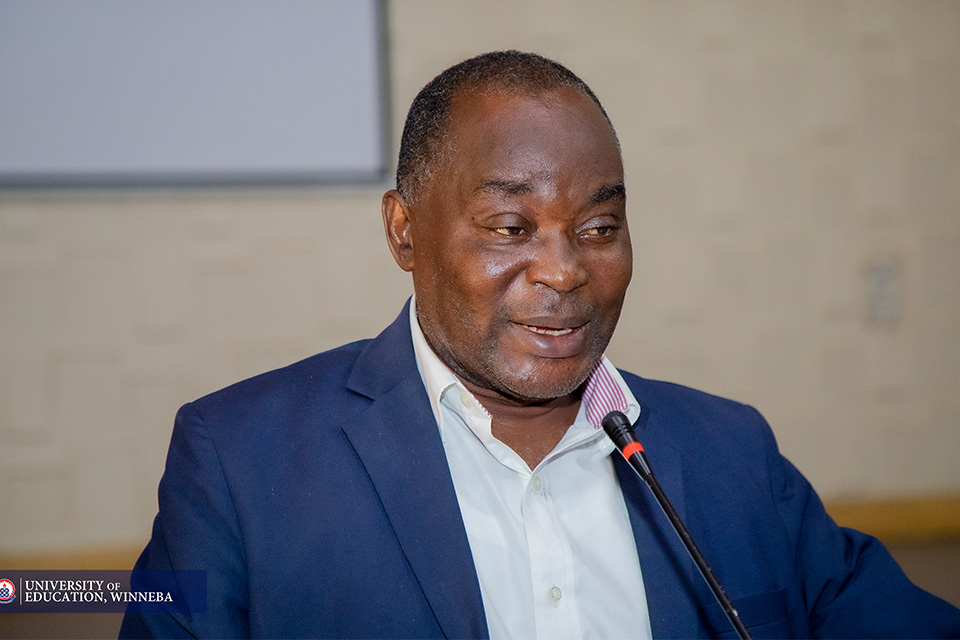
Chairman of the occasion, Prof. Samuel Kwesi Asiedu-Addo, lauded the initiative as innovative and forward-looking, describing it as a model for other faculties across the University. He explained that a strategic plan serves as a roadmap that defines where an institution is, where it intends to go and how it plans to get there.
He emphasised the need for departmental plans to align with the broader institutional strategy, highlighting key pillars of UEW’s Strategic Plan including excellence in teaching, learning and research; institutional effectiveness and proactive administration; access, equity and inclusion; financial and environmental sustainability and infrastructure and ICT development.
He urged participants to focus on constructive engagement during the durbar, stressing that the purpose of the exercise was not fault-finding but collective improvement. He further advised faculty, particularly early-career scholars to prioritise research, publication and professional growth as a foundation for effective leadership within the academy.
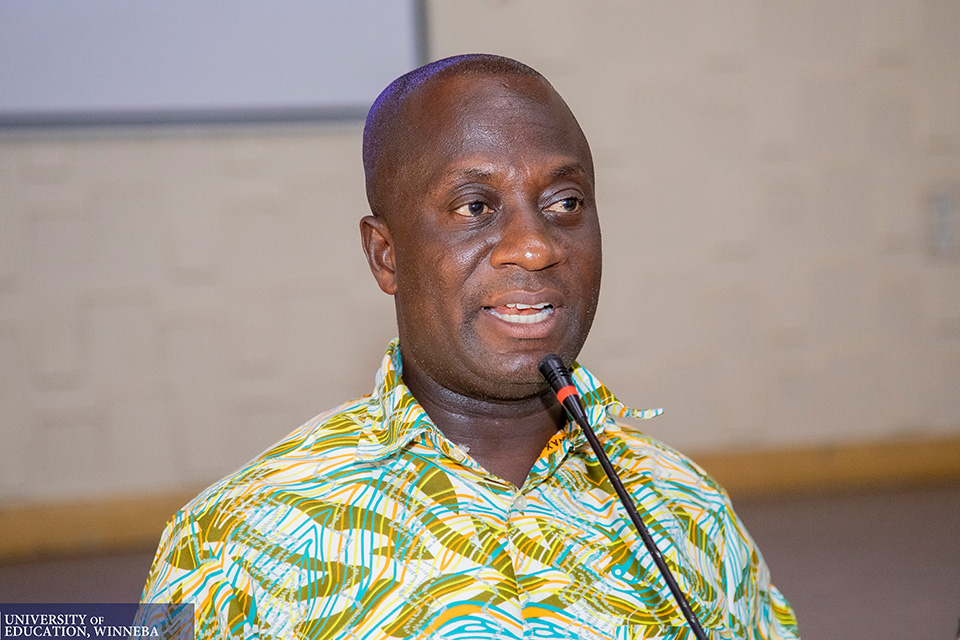
Providing technical insights into the monitoring process, Mr. Prince Asiedu, Deputy Registrar at the Planning Office, commended FHASHEE for its proactive approach. He noted that the faculty had taken the lead in implementing structures that align with the University’s strategic framework even before formal institutional mechanisms were fully operationalised.
He outlined the role of the Strategic Plan Monitoring Committee (SPMC) in overseeing implementation at the institutional level and explained how faculty implementation teams complement this effort by coordinating activities and tracking progress within their respective units. He emphasised that HoDs remain central to the process, as they are responsible for developing, executing and monitoring departmental operational plans in collaboration with their teams.
Mr. Asiedu further emphasised the importance of evidence-based reporting, noting that departments are required to assess their performance using clearly defined key performance indicators (KPIs) supported by verifiable data. He indicated that the reporting template provided by the Planning Office ensures consistency and accountability. It captures critical elements such as strategic priorities, specific activities, progress status, percentage completion, challenges and proposed solutions.
He encouraged departments to escalate issues that exceed their capacity through the appropriate channels, stressing that effective monitoring and evaluation are essential for informed decision-making and continuous improvement.
The durbar also provided a platform for reflective dialogue, enabling participants to interrogate existing practices, share experiences and propose innovative solutions to enhance performance. Presentations by HoDs revealed both significant strides and persistent challenges, reinforcing the need for sustained collaboration, resource optimisation and strategic alignment across departments. The exercise underscored the importance of collective responsibility in achieving faculty and institutional goals.
The Strategic Plan Monitoring and Evaluation Durbar forms part of FHASHEE’s broader commitment to strengthening governance, promoting accountability and fostering a culture of continuous improvement.