FSE-UEW Explores Strategic Partnerships to Advance Environmental Sustainability


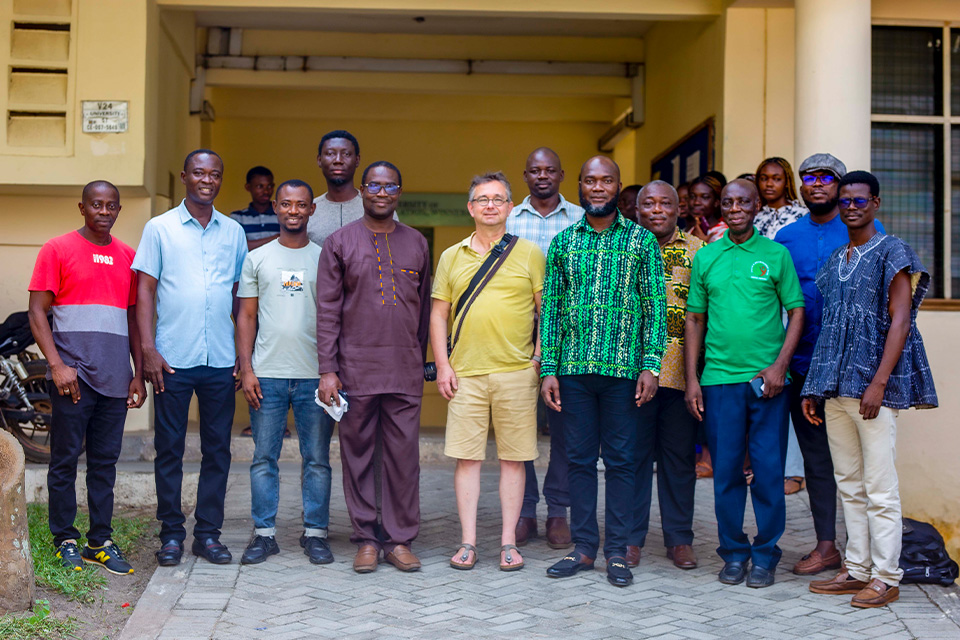
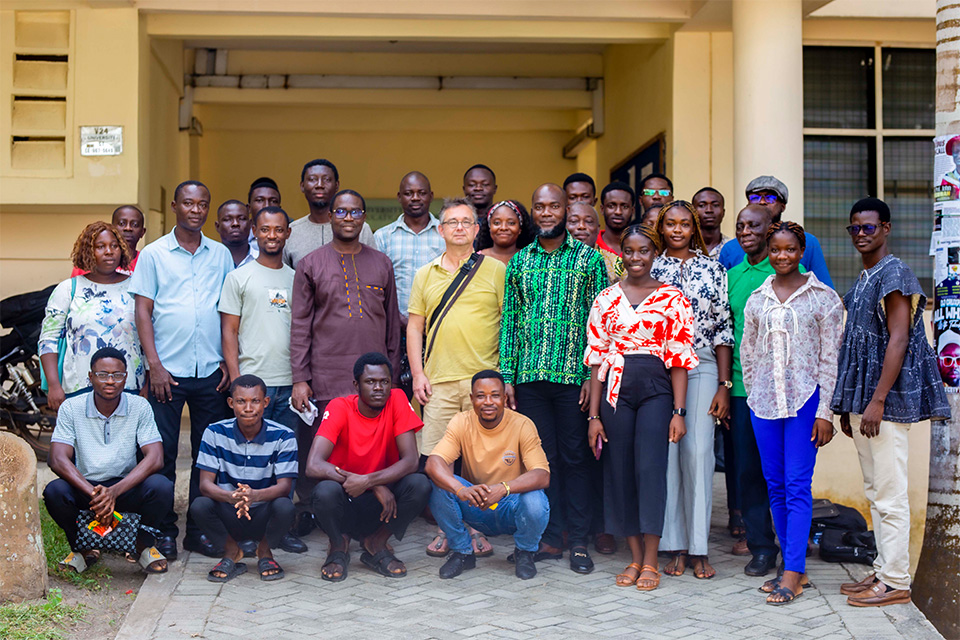
The Faculty of Science Education (FSE) at the University of Education, Winneba (UEW) has engaged fruitfully with representatives of the Youth and Environmental Club at Agona Nyakrom and its German partners to promote environmental sustainability.
The meeting, held at the South Campus of UEW on Thursday, 22nd January, 2026, brought together key stakeholders including the Dean, the Vice-dean and lecturers from the Department of Agricultural and Environmental Science Education and the FSE.
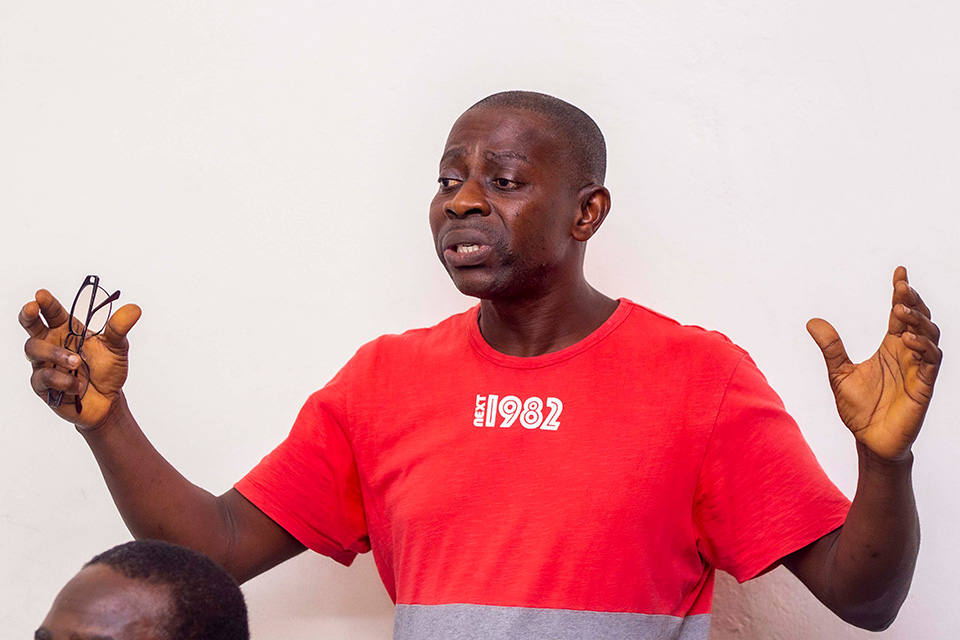
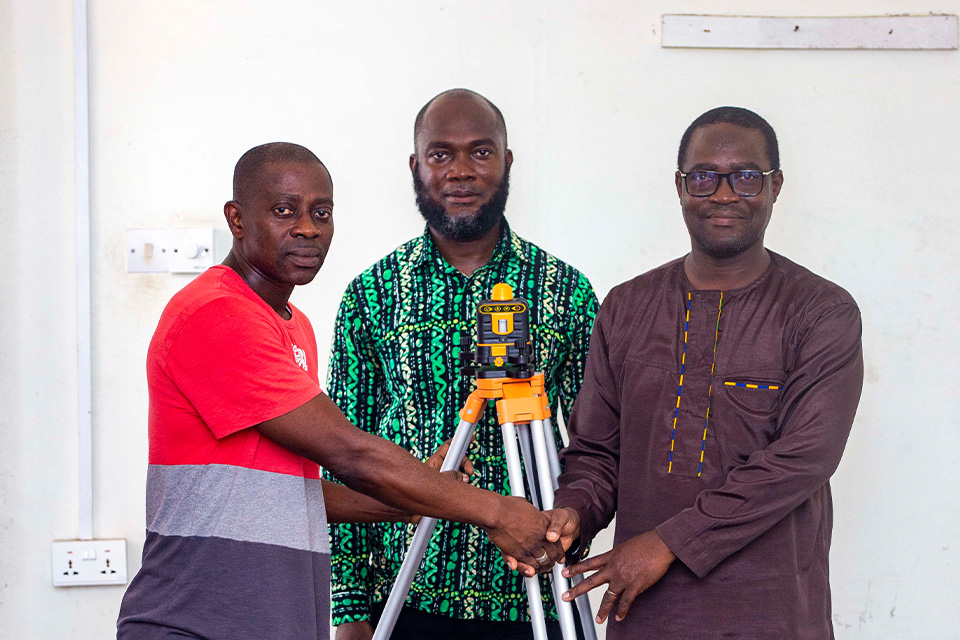
Dr. Kwabena Kyere, Coordinator of the University Farm, stated that the visit resulted from the growing relationship between UEW and the Youth and Environmental Club. He noted that the engagement aimed to explore deeper collaboration, particularly in addressing climate change, environmental sustainability, and youth-focused environmental education. He emphasised that the partnership strongly aligns with UEW’s mandate to provide education and research that respond to national and global development challenges.
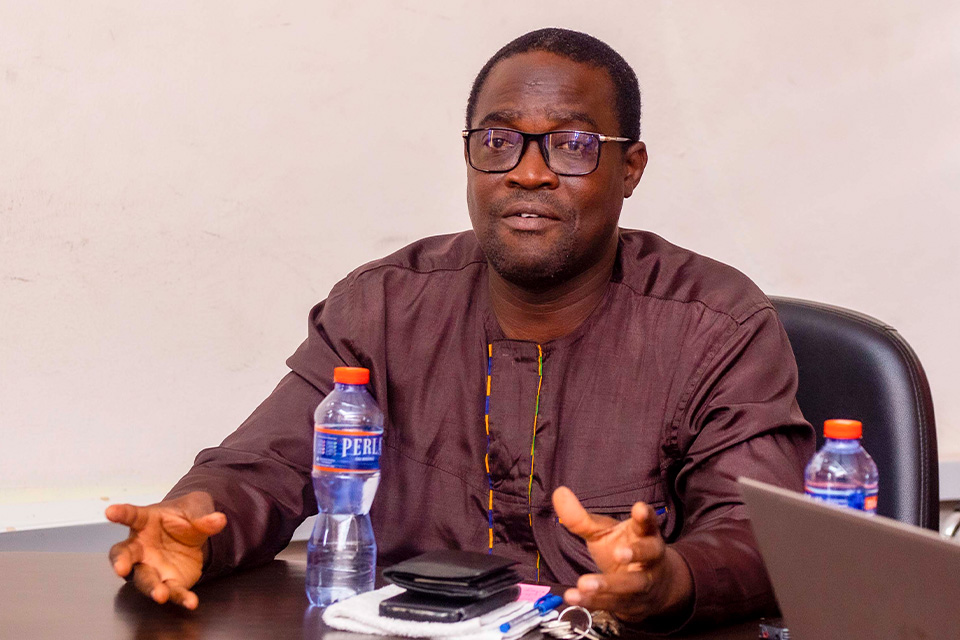
Prof. Arkoful Sam, Dean of FSE, reaffirmed UEW’s commitment to sustainability, stating that environmental sustainability remains a central pillar of the University’s strategic vision towards 2030. He indicated that the Faculty of Science Education, particularly the Department of Agricultural and Environmental Science Education, is well-positioned to collaborate with the visiting organisations due to shared goals and geographical proximity.
Prof. Sam expressed optimism that the discussions could lead to joint projects, structured partnerships and the eventual signing of a Memorandum of Understanding (MoU) to formalise collaboration.
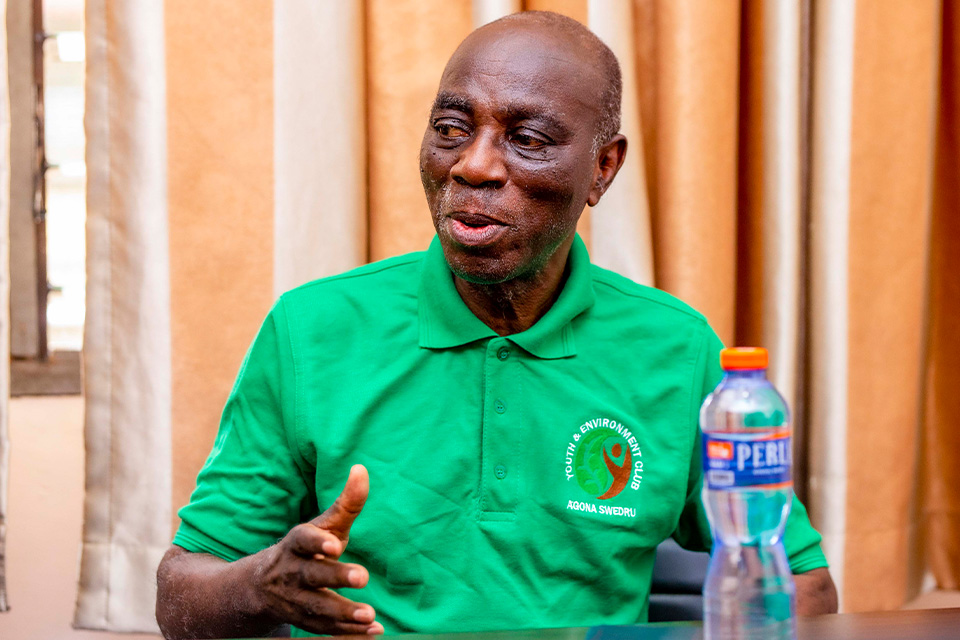
Dr. Samuel Essiamah, who has spent over five decades working in forestry and environmental research in Germany, shared his extensive experience in environmental science and community-based sustainability initiatives. He recounted his involvement in addressing forest degradation in Europe and his decision to apply similar scientific approaches to environmental challenges in Ghana.
According to him, his work in the Agona area has expanded from tree planting in schools to the establishment of environmental education initiatives aimed at promoting chemical-free agriculture, youth involvement and public health.
Dr. Essiamah expressed concern about the increasing use of harmful agro-chemicals in food production and their impact on public health, particularly among young people. He called for stronger institutional collaboration to promote sustainable farming practices, mechanised weeding alternatives and environmental education, noting that universities such as UEW have a critical role to play in research, training and community engagement.
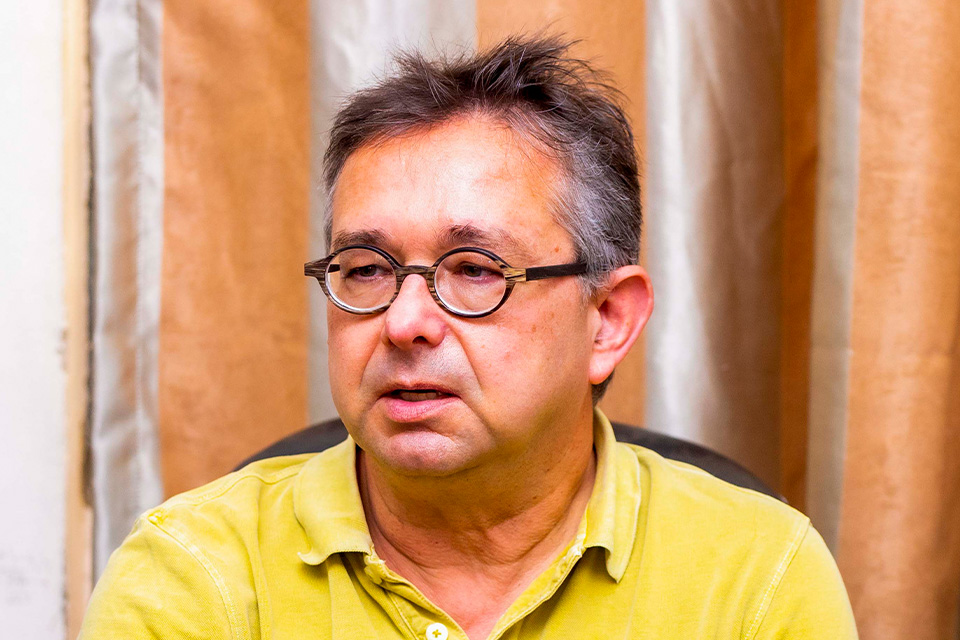
Mr. Tobias Klaus, Head of International Projects at the ECOLOG Institute for Social Ecological Research and Education in Germany, highlighted the importance of designing sustainability initiatives that are socially and economically viable. He stressed that youth participation could be increased by adopting business-oriented models that offer income opportunities while promoting environmentally friendly practices. He also highlighted the need for locally driven solutions that reduce dependence on foreign donor funding and strengthen community ownership.
The engagement concluded with a call for continued dialogue and collaboration between UEW, the Youth and Environmental Club and their international partners. Participants agreed that leveraging UEW’s academic expertise, research capacity and community outreach structures would significantly contribute to advancing environmental sustainability, youth empowerment and climate-resilient development in Ghana.
The meeting underscores UEW’s growing role as a hub for sustainability-driven partnerships and reinforces its commitment to using education, research and strategic collaboration to address pressing environmental challenges.