DRID-UEW Enhances Research Project Accountability with Two-Day Capacity-Building Workshop



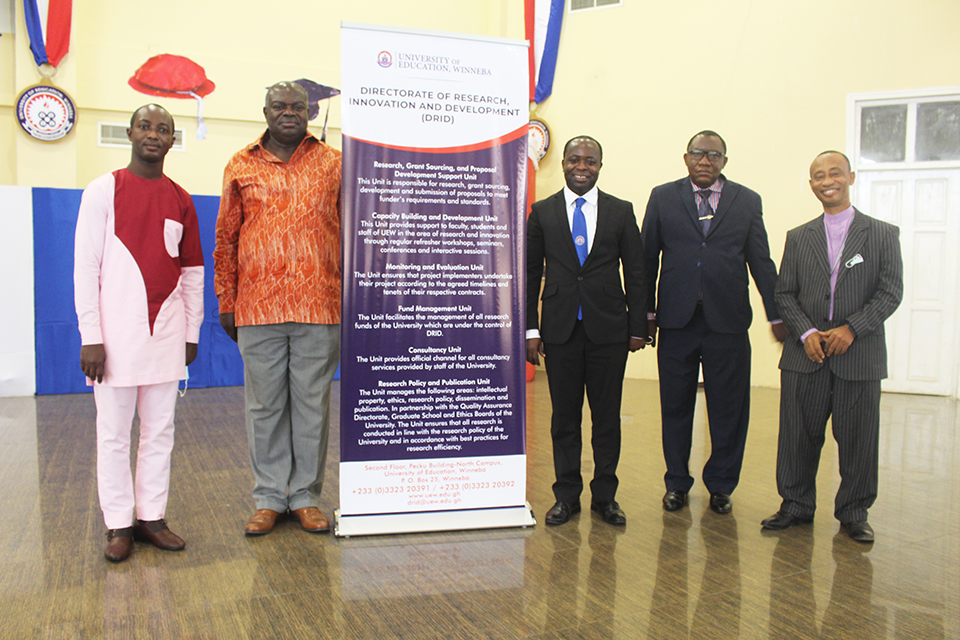
The Directorate of Research, Innovation and Development (DRID) of the University of Education, Winneba (UEW), has deepened its drive to strengthen accountability, compliance and best practices in research project implementation by organising a two-day capacity-building workshop for research project implementers and members of the University community.
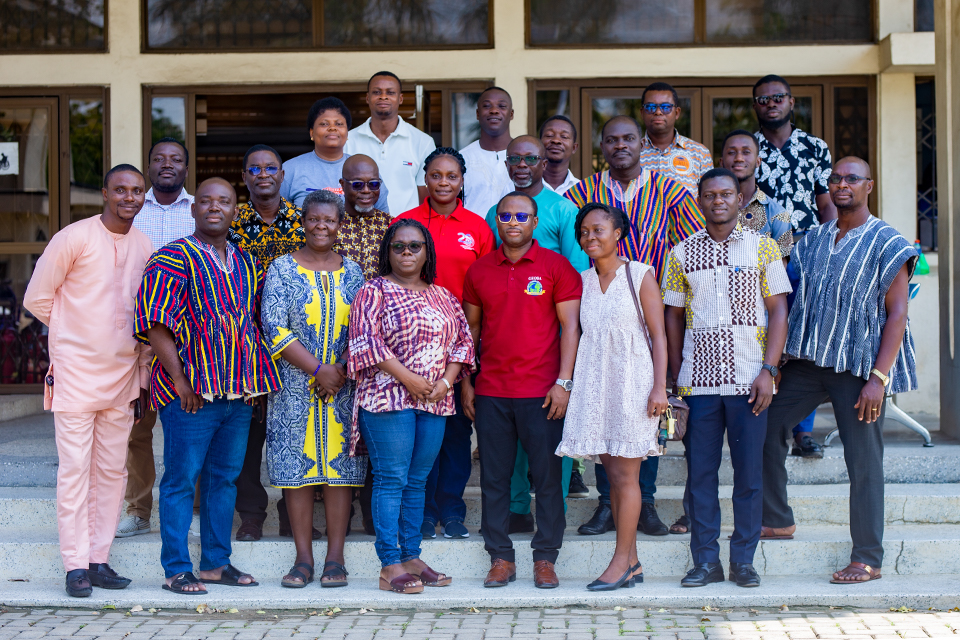
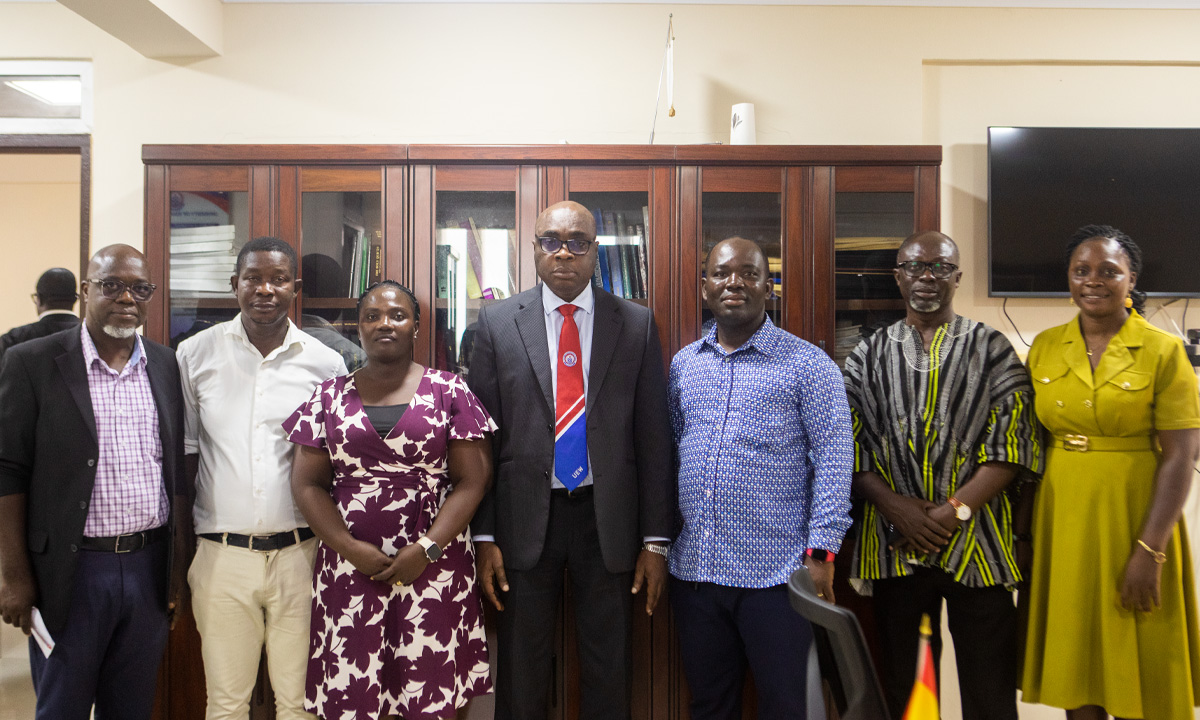
The workshop, held on Tuesday and Wednesday, 20th and 21st January, 2026, at the North Campus Mini-Conference Room, brought together academic staff, researchers, project implementers and key administrative officers to enhance institutional capacity in grants and project management.
Organised under the theme “Financial Management, Procurement Procedures, Compliance and Accountability in Research Project Implementation,” the workshop reflected UEW’s strategic commitment to research governance and donor confidence. It provided a structured platform for aligning researchers with institutional systems, regulatory frameworks and evolving donor expectations in an increasingly competitive and compliance-driven funding environment.
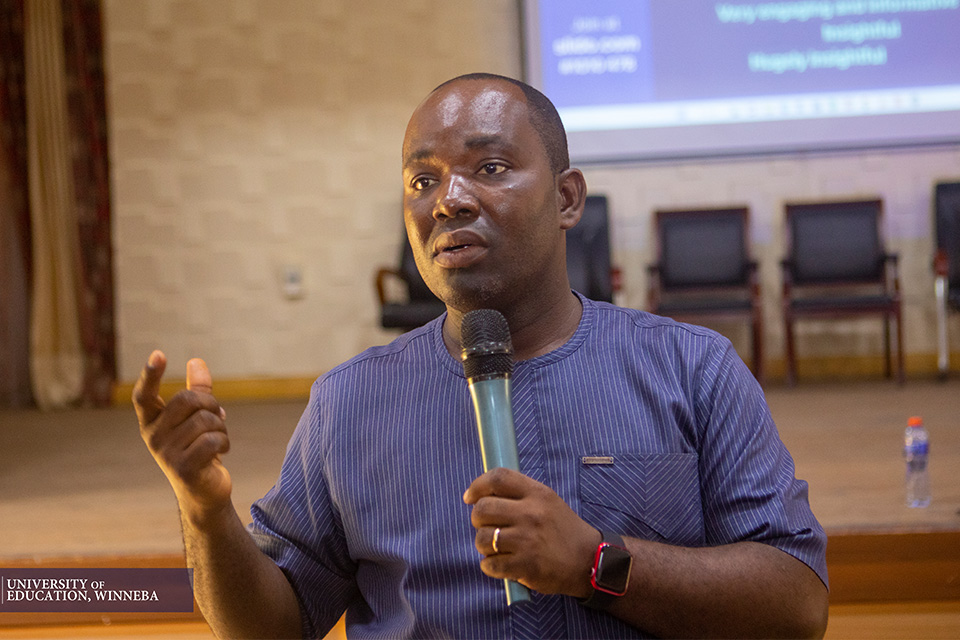
Opening the workshop, Prof. Enoch F. Sam, the Director of DRID, highlighted the changing nature of research funding, noting that contemporary grants are increasingly long-term, impact-oriented and governed by stringent financial, procurement and reporting requirements. He stressed that securing funding represents only the first milestone in the research lifecycle and that successful implementation, accountability and compliance are critical to sustaining donor confidence and safeguarding the University’s credibility.
Prof. Sam explained that DRID is repositioning itself to provide proactive, end-to-end support to researchers, from proposal development through implementation to project close-out. This approach, he noted, is aimed at minimising common implementation lapses and ensuring alignment with both institutional policies and donor conditions. He cautioned staff against bypassing established procedures, particularly in contract signing and grant acceptance, stressing that all agreements must pass through the appropriate institutional approval processes.
He further urged project implementers to work closely with the Finance Office, Procurement and Internal Audit and to ensure the timely submission of technical and financial reports in line with institutional and donor requirements.
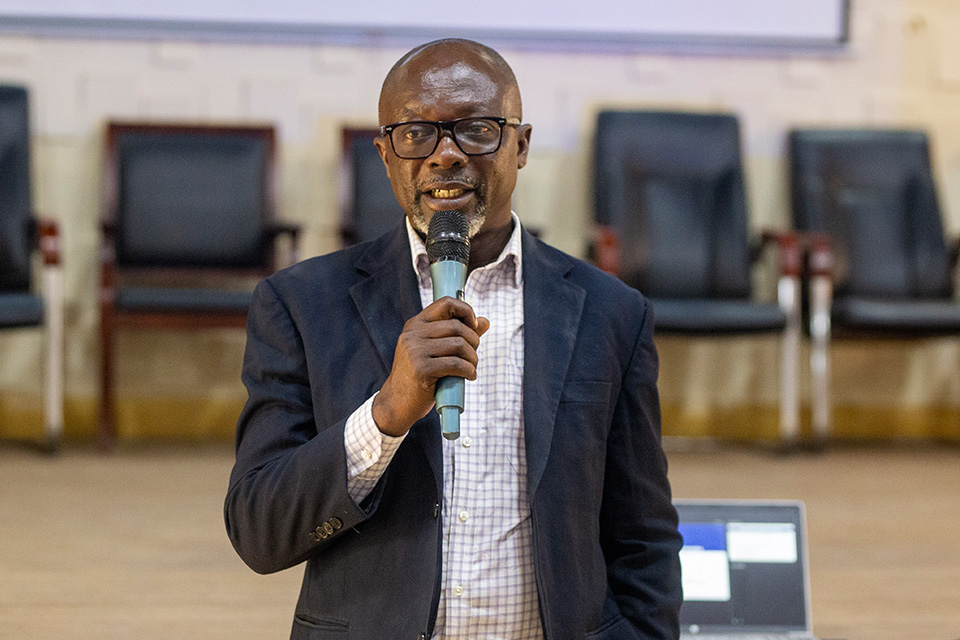
In a detailed presentation on DRID’s role in research project implementation, Prof. Alfred Kuranchie, the Deputy Director of DRID, outlined the structure, mandate and evolving responsibilities of the Directorate. He traced the development of the Directorate and highlighted its key functions, including grant sourcing, proposal development, capacity building, monitoring and evaluation, research policy development, consultancy and patent services, and financial management. Prof. Kuranchie explained that DRID supports researchers at the pre-award, award, and post-award stages by providing assistance with proposal development, budgeting, compliance, orientation for awardees, reporting and project close-out processes.
Prof. Kuranchie further noted that DRID serves as the liaison between the university and funding agencies, ensuring that all grants are managed in accordance with institutional policies and donor requirements. He added that the Directorate is enhancing its electronic systems to improve grant tracking, documentation and institutional reporting.

Providing further insight into DRID’s accountability architecture, Dr. (Mrs.) Charity Esenam Anor, Coordinator for Monitoring and Evaluation, outlined the Directorate’s reporting and oversight framework. She explained that the framework is designed to support, not burden, researchers, and requires the submission of quarterly technical and financial reports capturing project progress, deliverables, challenges and expenditure.
Dr. Charity Anor noted that the reporting system enables DRID to maintain an accurate institutional database, respond promptly to donor reporting demands and identify implementation challenges early. She emphasised that effective monitoring and evaluation facilitate timely corrective action and ensure that projects remain aligned with approved objectives, timelines and budgets.
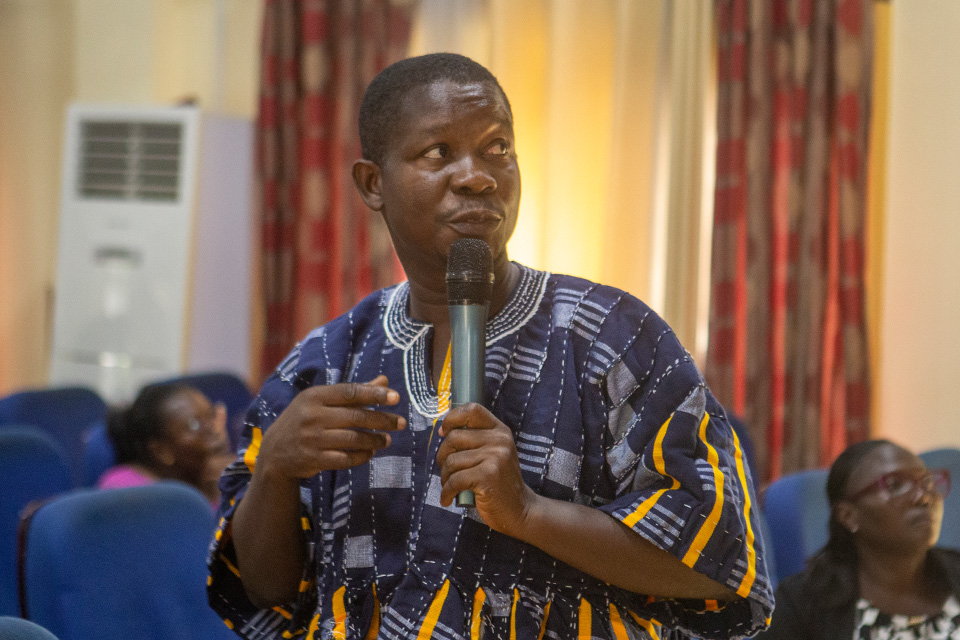
Contributing to discussions on internal research support, Dr. Philip Siaw Kissi, Coordinator for Capacity Building and Development at DRID, introduced participants to the Research, Innovation and Staff Development Fund, an internal funding mechanism established to support research activities at UEW. He disclosed that the fund had undergone major revisions to improve accessibility, transparency and efficiency including proposed funding ceilings for small, medium and large grants and clearly defined implementation timelines.
Dr. Kissi further revealed that DRID is working towards deploying an online application and review system for the fund, supported by structured orientation and training for applicants and reviewers. He explained that these reforms are intended to promote fairness, efficiency and accountability in internal research funding.
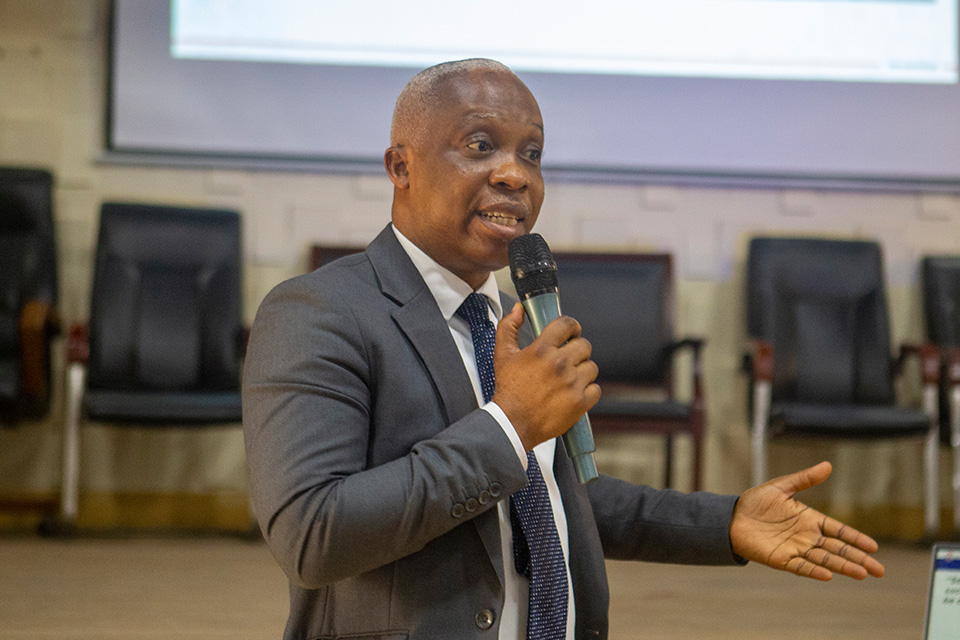
Addressing financial stewardship, Mr. Charles Edem Bedzra, Deputy Finance Officer, delivered a detailed presentation on the management of research and project funds within the University’s regulatory framework. He outlined key principles governing budgeting, fund disbursement, financial reporting and compliance with public financial management and procurement laws.
Mr. Bedzra stressed that adherence to these principles is essential for transparency, value for money and institutional credibility. He added that sound financial management practices protect individual project implementers from audit risks and enhance UEW’s capacity to attract, manage and retain external funding from local and international donors.
The second day of the workshop shifted attention to compliance, procurement, risk management and accountability from the perspectives of key oversight units within the University.

Mr. Emmanuel Ewusie-Mensah, Head of Compliance Audit and Transactions at the Internal Audit Office, emphasised that compliance with approved financial systems, procurement procedures and reporting structures is non-negotiable in research project implementation. He explained that internal audit functions are intended to promote transparency and risk mitigation rather than frustrate researchers.
Mr. Ewusie-Mensah urged project implementers to proactively identify risks and put in place mitigation measures to prevent financial mismanagement and adverse audit findings.

Mad. Mary Dzimey, the Head of Procurement, described procurement as one of the most critical risk areas in project implementation. She cautioned that time pressures and project deadlines do not justify deviations from approved procurement procedures.
She noted that inadequate documentation and unauthorised variations from approved budgets remain common challenges and stressed that every procurement transaction must be supported with the requisite approvals and records to protect both projects and individual officers.
Overall, the two-day capacity-building workshop reinforced UEW’s commitment to strengthening research governance, enhancing accountability and institutionalising best practices in grants and project management. It positioned DRID as a central support hub for researchers and affirmed the University’s determination to build a compliance-driven, transparent and credible research environment.
The engagement also underscored UEW’s strategic intent to consolidate its reputation as a trusted partner for local and international research funding, capable of managing complex projects with integrity, efficiency and full regulatory compliance.