UEW Basic School Pupils Explore Practical Agriculture at University Farm


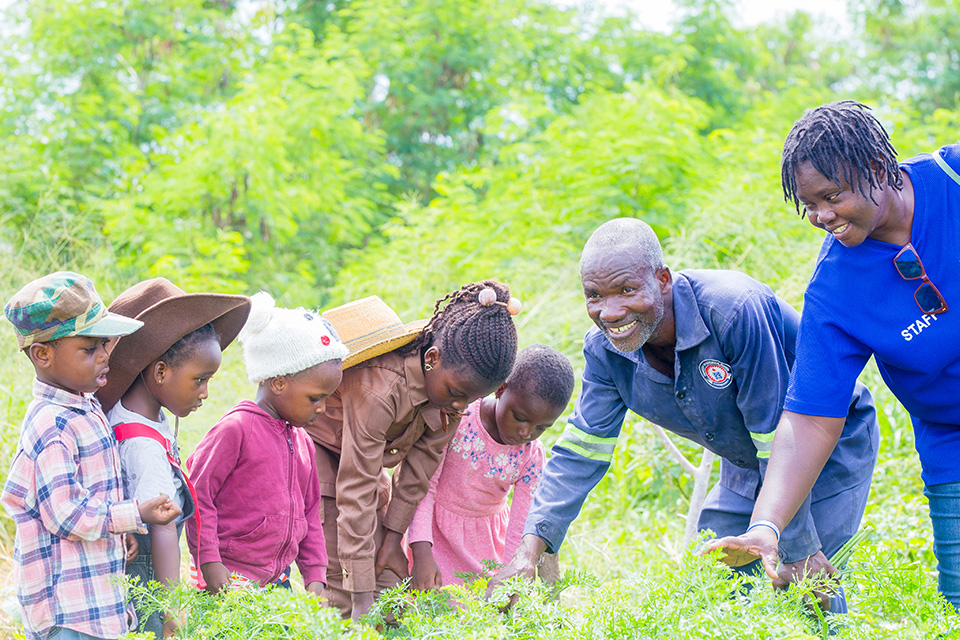
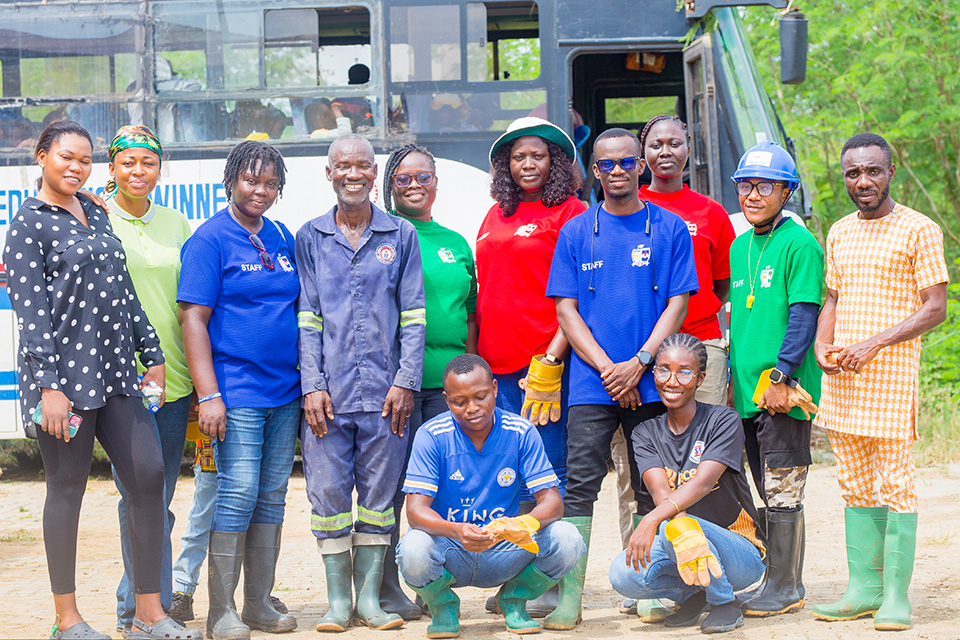
The University of Education, Winneba (UEW) has once again demonstrated its commitment to promoting practical learning and agricultural literacy among young learners as pupils of the UEW Basic School were taken on an engaging educational tour of the University Farm led by Farm Manager Mr. Kwame Ayisi and Assistant Farm Manager Mr. Mark Manu Affusah.
Pupils from the UEW Basic School had firsthand exposure to modern agricultural practices by visiting the University Farm on Thursday, 4th December, 2025. The tour, which formed part of this year’s Farmers’ Day educational activities, offered the learners practical knowledge in both animal and crop production.

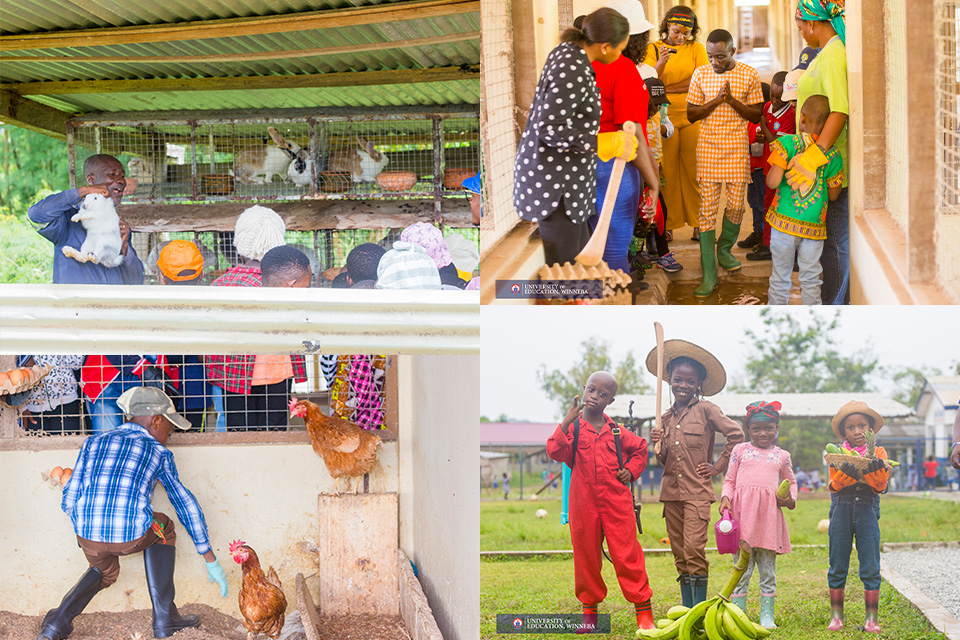
Mr. Ayisi introduced the pupils to the variety of livestock raised on the farm including layers, broilers, pigs, goats and cattle. He explained that although the cattle had been taken out for grazing earlier in the morning, the group would still observe other animals and learn about their management.
Mr. Ayisi guided the pupils to the poultry section, where he began an interactive session by asking, “Who likes eggs?” The question drew enthusiastic responses from the learners. He explained that eggs are produced only by female chickens—hens—and encouraged the pupils to identify the birds in the coop. He educated the pupils that hens require proper feeding, clean water and medication to remain healthy and productive.
He also demonstrated the basic biosecurity procedure required before entering a poultry house, explaining why visitors must disinfect their footwear to protect the chickens. Although the group did not enter the hen coop, the pupils observed the hens feeding, drinking and resting in the nest boxes. Two pupils were later selected to collect freshly laid eggs from the nest—a moment that sparked excitement among the group.
The tour continued at the crop section, where Mr. Affusah took over to educate the pupils on cabbage production. Standing by the young cabbage plants, he walked them through the entire process, from seed purchase to germination, transplanting, spacing, pest control, fertilisation and watering.
Mr. Affusah emphasised the importance of proper nursery preparation, explaining how seeds are sown in seed trays, covered with soil, watered and shaded for five days until they begin to germinate. He noted that seedlings are transplanted after four weeks and carefully spaced using lines and pegs to determine the exact plant population. This practice, he said, helps farmers estimate their potential yield and make accurate financial projections when applying for loans.
Addressing concerns raised by one of the teachers about the use of unclean water in vegetable production, Mr. Affusah clarified that the UEW farm uses only clean, piped water to ensure consumer safety. He contrasted this with some farmers elsewhere who may rely on contaminated water sources, stating, “Because we are an institution, we add knowledge to our diligence. We care about the health of the consumer.”
The assistant farm manager also discussed organic pest control methods including the use of neem extracts mixed with vinegar and baking powder. He educated the pupils on the importance of fertiliser application, explaining that crops such as cabbage require balanced nutrients to grow well without being damaged.
When asked whether cabbage farming is profitable, Mr. Affusah highlighted its economic value, noting that 400 heads of cabbage sold at GH₵20 each can yield significant returns within three months. He encouraged the learners to appreciate farming as a rewarding profession, provided one commits to hard work and proper management.
The visit concluded with lessons on crop rotation, intercropping with okro or onions and sustainable farming practices to preserve soil health and reduce pest damage.
The educational tour reaffirmed UEW’s dedication to promoting agricultural knowledge at all learning levels while exposing pupils to real-world experiences that reinforce classroom instruction.