
UEW Considers Eco-Friendly Scooter Initiative to Improve Campus Mobility


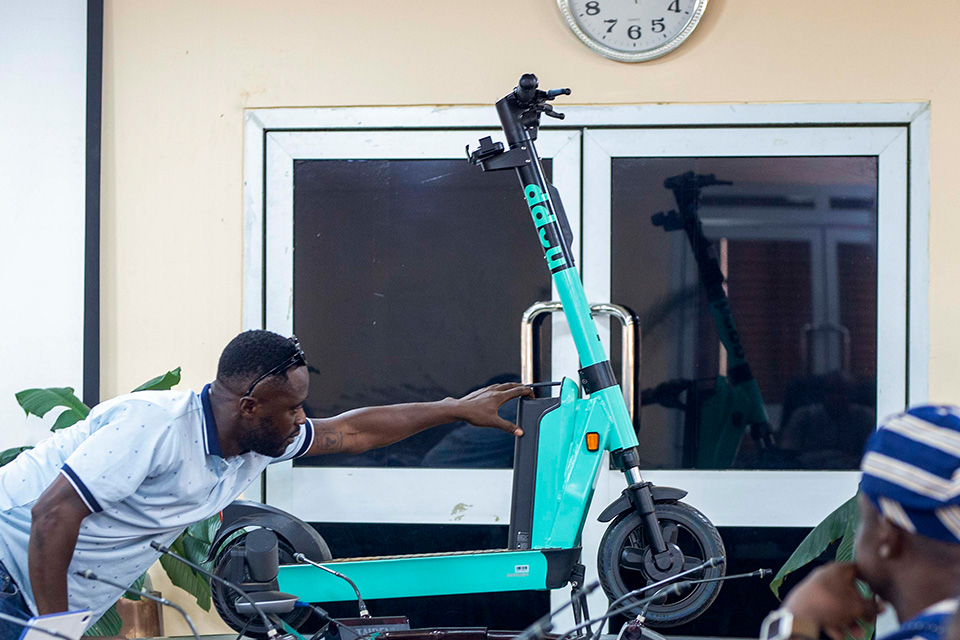
The University of Education, Winneba (UEW) is exploring an innovative partnership with mobility company HOPP to introduce electric scooters and e-bikes on campus as part of efforts to improve student transportation, promote sustainability and enhance campus life.
The proposal was presented at a high-level meeting held at the Council Chamber of UEW on Thursday, 9th April, 2026, bringing together members of UEW Management and representatives of HOPP to deliberate on the feasibility, safety and operational framework of the initiative.

Prof. Emmanuel Osei Sarpong, the Dean of Student Affairs, explained that the proposal aligns with the University’s broader vision of promoting a green and healthy campus environment. He noted that the initiative seeks to reduce carbon emissions, improve air quality and enhance mobility for both students and staff. According to him, the introduction of e-scooters and e-bikes could significantly ease movement across the sprawling campus while contributing to environmental sustainability.
Prof. Sarpong indicated that the proposal would require extensive stakeholder engagement including consultations with units such as Development, the Students’ Representative Council (SRC), IT Services, Security and Transport. He stressed the need to assess cost implications, particularly the pricing model for students as well as infrastructure considerations such as designated parking areas and routing systems.
He stated that issues of data privacy and security would be examined in collaboration with IT Services. He also highlighted the academic and practical opportunities embedded in the proposal, noting that it could be integrated into UEW’s curriculum to provide hands-on training for students. The initiative, he said, could create employment opportunities for students engaged in maintenance, battery management and operational support for the scooters.

Prof. Stephen Jobson Mitchual, the Vice-Chancellor of UEW, reaffirmed Management’s commitment to initiatives that enhance student welfare. He emphasised that the University remains open to innovative solutions that make campus life more convenient and efficient. He noted that improved mobility would enable students to better manage their time, reduce fatigue and allow them to focus more effectively on their academic pursuits.
Prof. Mitchual commended the HOPP team for the proposal and reiterated UEW’s interest in projects that improve the quality of student life. He indicated that a technical team would be constituted to conduct a thorough assessment of the proposal, focusing on safety, infrastructure compatibility and operational sustainability.

Presenting on behalf of HOPP, Mr. Emmanuel Yaw Boateng outlined the operational model of the scooter system, drawing on his experience deploying similar services on university campuses in the United States including the University of Maryland. He explained that the scooters operate through a mobile application, allowing users to locate, unlock and pay for rides conveniently.
Mr. Boateng described the system as eco-friendly, noting that it produces no carbon emissions and offers a sustainable alternative to traditional fuel-powered transport. He added that the scooters are equipped with advanced safety features, including GPS tracking, geofencing technology and speed regulation. “These features allow the University to control operational zones, restrict access to certain areas and ensure safe usage across campus,” he said.
Addressing security concerns, he assured Management that the scooters are monitored in real time and insured against theft or damage. He also noted that the system includes designated parking zones to prevent obstruction and ensure orderliness. “Users would be required to park scooters within approved areas before ending their trips,” he averred.
Mr. Boateng indicated that users would undergo a brief in-app training before their first ride while speed limits could be adjusted in specific zones such as lecture halls and pedestrian areas. He added that although helmets would be provided initially, users may eventually be required to procure personal protective gear to maintain hygiene standards.
The proposal also includes a rollout strategy that allows students to test the scooters through free trial sessions, a model that has reportedly been successful in other Ghanaian universities such as the University of Ghana and the University of Cape Coast.

Prof. Esther Yeboah Danso-Wiredu, the Pro-Vice-Chancellor, welcomed the initiative but raised concerns regarding infrastructure and inclusivity. She suggested creating designated lanes using road markings rather than structural alterations. She emphasised the importance of ensuring the service appeals to all students, including women who may require targeted engagement strategies.
The proposed e-scooter initiative represents a forward-looking step in UEW’s pursuit of a modern, student-centred and environmentally sustainable campus, reinforcing its commitment to innovation in higher education.