UEW Art Students Transform “Waste to Worth” in Striking 46-Foot Installation


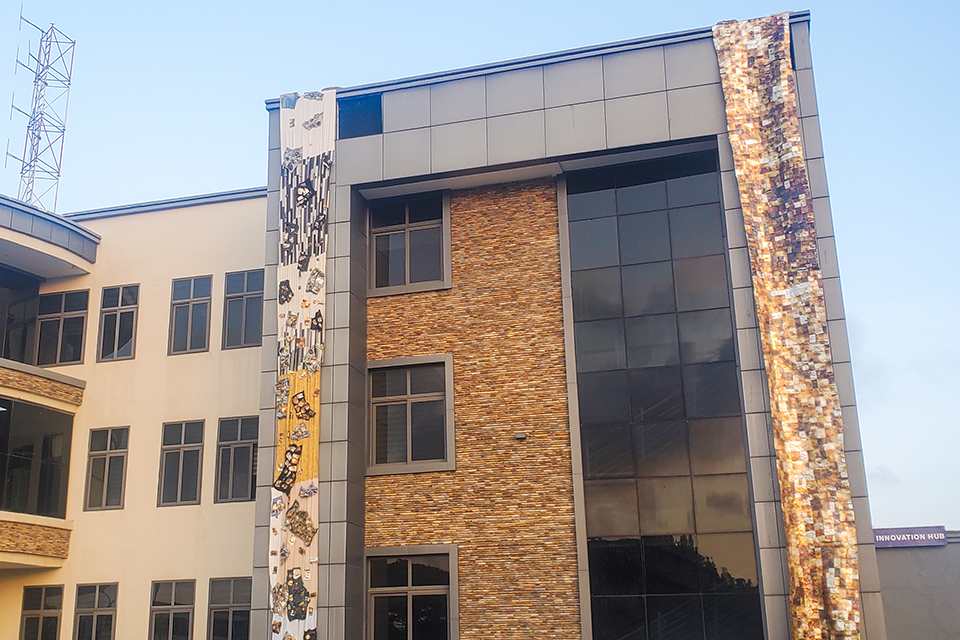
On Thursday, 18th September, 2025, the forecourt of the Students Centre at the University of Education, Winneba (UEW) was transformed into a vibrant art space as three final-year students of the Department of Art Education unveiled a monumental 46-foot installation titled “Waste to Worth.”
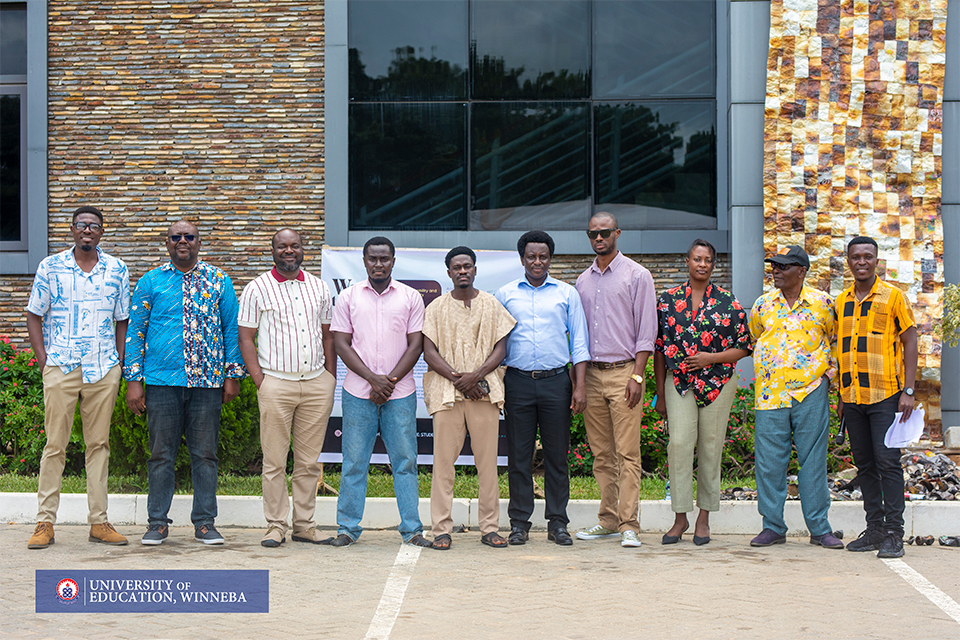
The outdoor display which drew faculty, curators, students and visitors, explored themes of environmental sustainability and cultural identity while challenging prevailing attitudes towards waste.
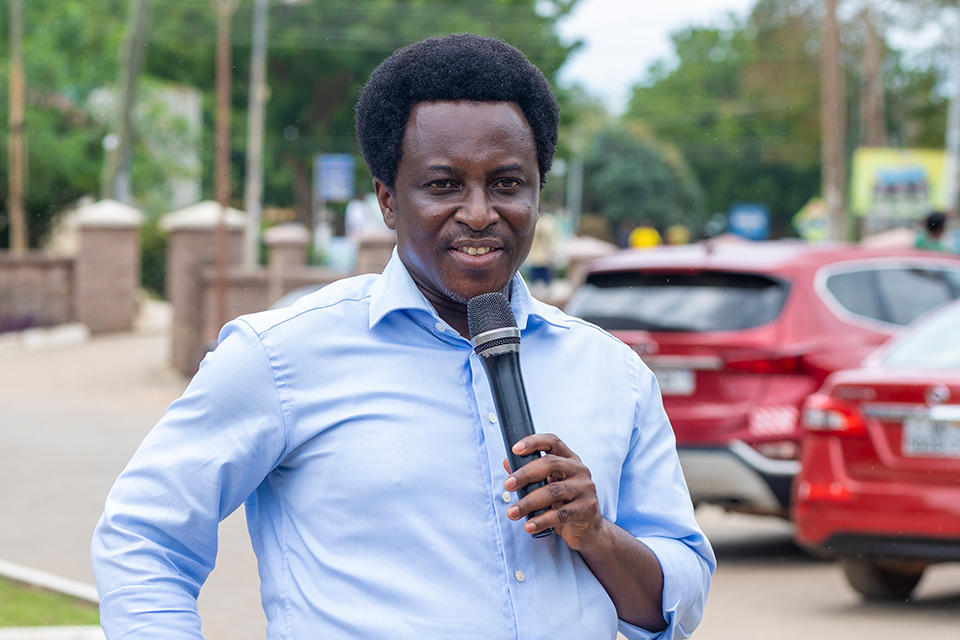
Dr. Kwame Kyere Diabour, Head of the Department of Art Education, commended the student artists for their bold statement. “Works of this nature bring to mind the harm that we are doing to the environment we live in. Sustainability has become a global trend and a pressing concern and as artists, we always find innovative solutions to societal problems. This particular work is one such solution,” he said.
Dr. Diabour praised the curators and artists for creating a piece that not only raises awareness of environmental issues but also elevates the Department and the University. Declaring the exhibition officially open, he encouraged guests to engage directly with the artists to appreciate the context and meaning of their work.
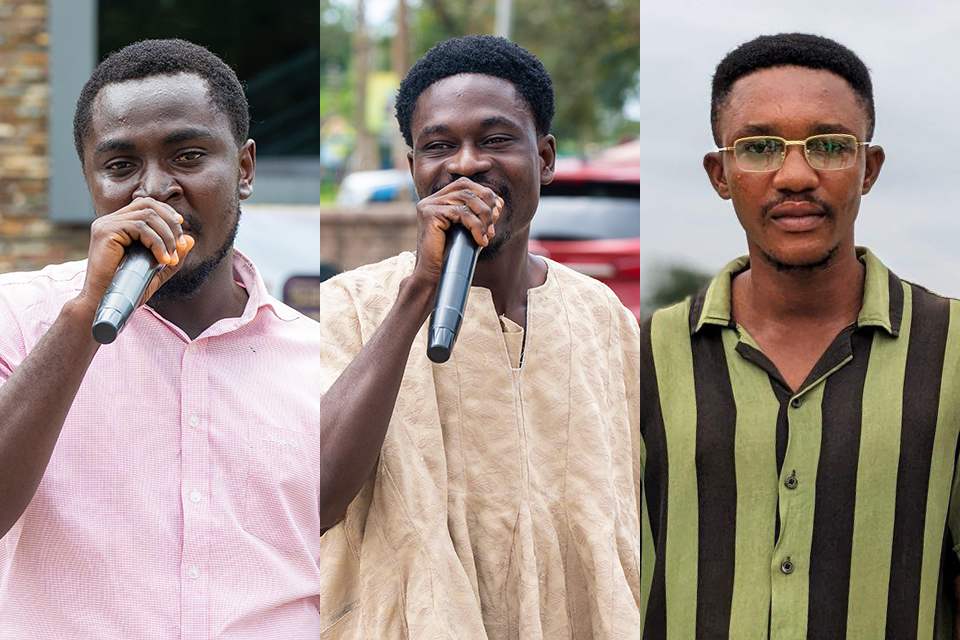
The installation, created by Martin Tetteh Narh, James Wofa Ampiah and Emmanuel Akwasi, reimagines discarded materials as objects of beauty and cultural resonance. Constructed from two ubiquitous waste products, discarded aluminum beverage cans and second-hand clothing (locally called obroni w’awu), the piece responds to Ghana’s mounting waste crisis and its toll on public health and flooding. The artists burned, cut and hammered the cans into sheets and stitched together patchwork textiles before layering both materials to echo traditional Ghanaian fabrics like Kente.
In their artist statement, the trio described Waste to Worth as “both a protest and a call to action” that reframes waste not as a symbol of neglect but as a valuable resource for art, dialogue and cultural preservation. “It protests the environmental degradation caused by waste and advocates for the importance of recycling while simultaneously honouring Ghanaian traditions of reuse, weaving and storytelling. In this way, it bridges the past and present, drawing on indigenous aesthetics to address urgent contemporary concerns,” they wrote.
Curator Mr. Ebenezer Kow Abraham underscored the significance of the location and scale of the work. “This is the first time we are having such a big installation from our department. The Students Centre is one of the most important places on campus and rarely hosts events like this, which should tell you the magnitude of what these artists have created,” he said.
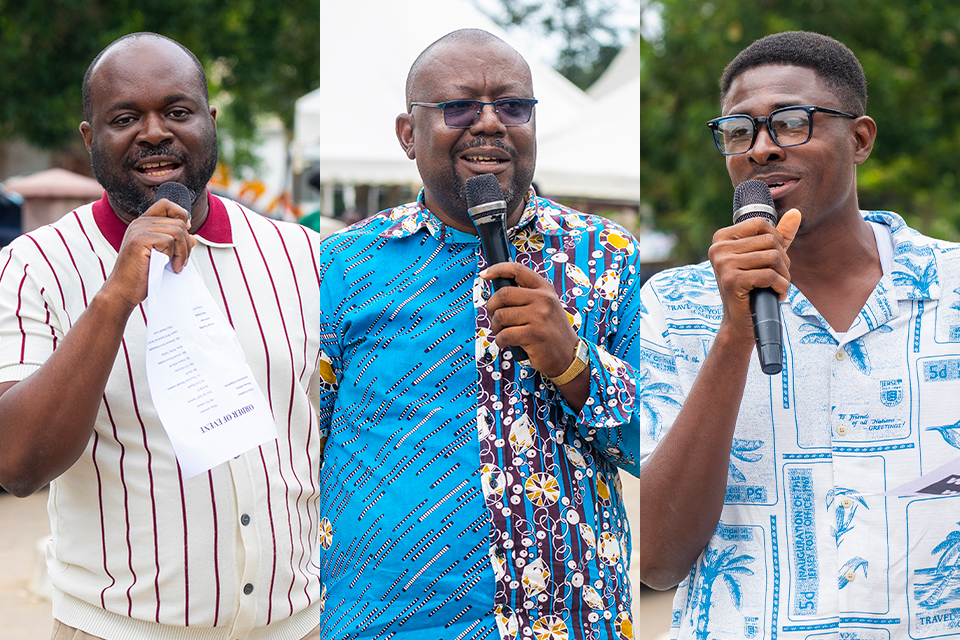
He likened the left side of the installation to Asafo war attire, a signal of the seriousness of the protest against indiscriminate disposal of cans and the right side to Kente cloth worn on Ghana’s most important occasions. “We have used what ordinary people would throw away and transformed it into something powerful that makes you rethink how you discard things,” he said.
Co-curator Dr. Theophilus Mensah highlighted the installation as an example of artists addressing one of Ghana’s most persistent social problems: waste management. “What we have been struggling to deal with as a nation, artists have managed to repurpose into very valuable artefacts. For me, reusing waste is one of the best ways that we can make a useful impact. I want to encourage all of us—students, artists, non-artists—to take cues from what we see in our environment and contribute positively to enhancing it,” he stated.
The third curator, Mr. Edward Buxton, traced the evolution of the students’ project from an independent study in drawing to a full-fledged research exhibition. He emphasised that Waste to Worth does more than highlight environmental sustainability; it also challenges traditional concepts of beauty in art. “This work offers textural diversity and reconnects discarded materials back into society. Things that you are familiar with in everyday life are given new life and function in a different space altogether. That is the beauty of it,” he remarked.
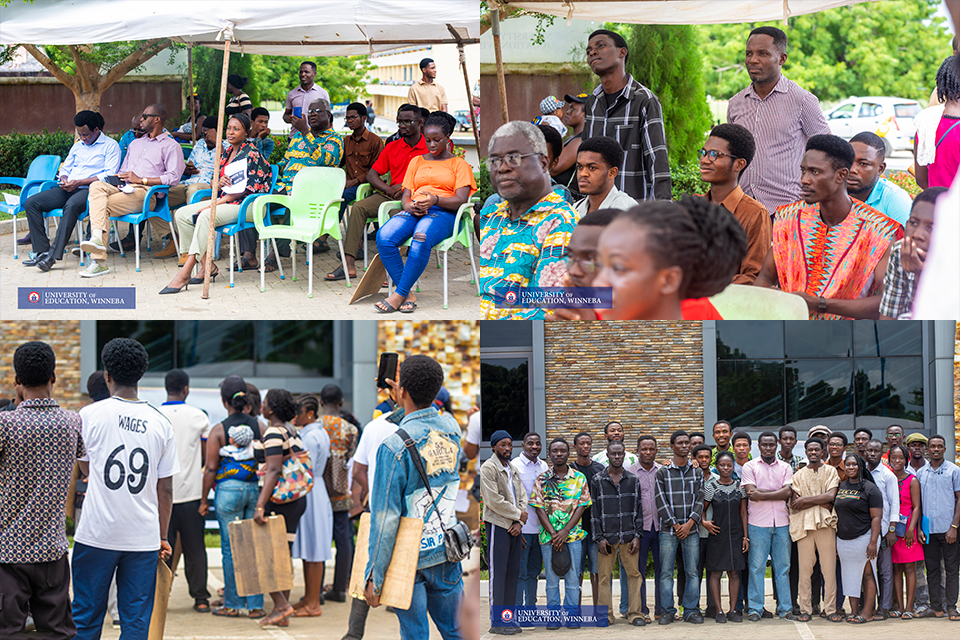
As visitors moved around the 46-foot installation, many could be seen photographing the intricate textures and patterns or discussing the environmental messages it conveyed. Faculty members praised the students’ research and craftsmanship while guests left comments to help the artists refine their work further.
With Waste to Worth, the Department of Art Education has signalled a bold new direction for art at UEW, one that fuses creativity, research and social consciousness. By turning discarded cans and fabrics into a monumental artwork, Narh, Ampiah and Akwasi not only showcased their own talent but also embodied the power of art to provoke dialogue, inspire change and project the University’s commitment to sustainability on a national stage.